Speaker Event
Reinout Boettcher
Senior Country Officer for Switzerland and head of Swiss Investment Banking · J.P. Morgan

- Date
- Thursday, 22 October 2026
- Time
- 17:30
- Place
- Square Discovery Grid, University of St. Gallen
- Language
- English
Looking back · Thursday, 22 October 2026
An Evening with Reinout Boettcher
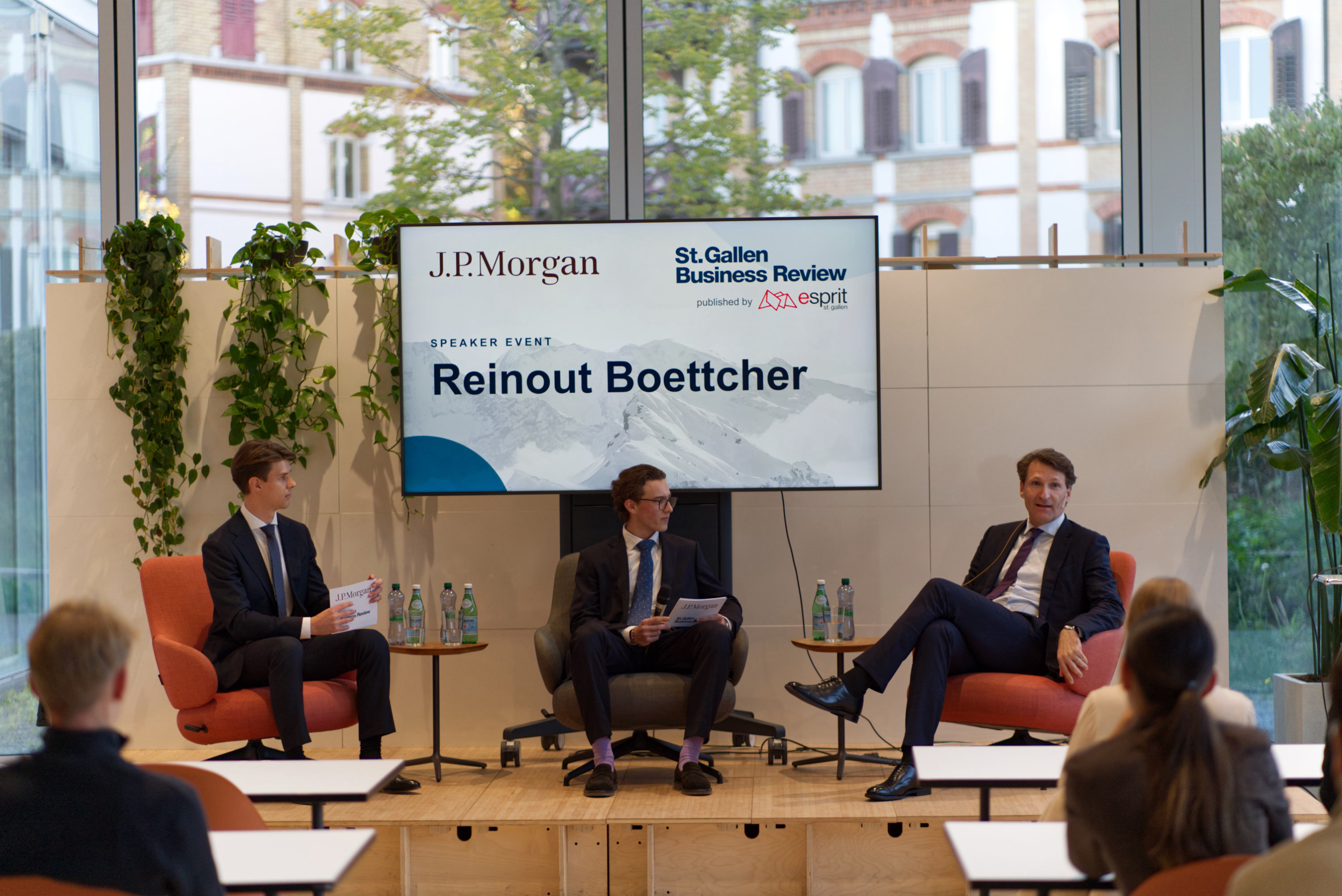
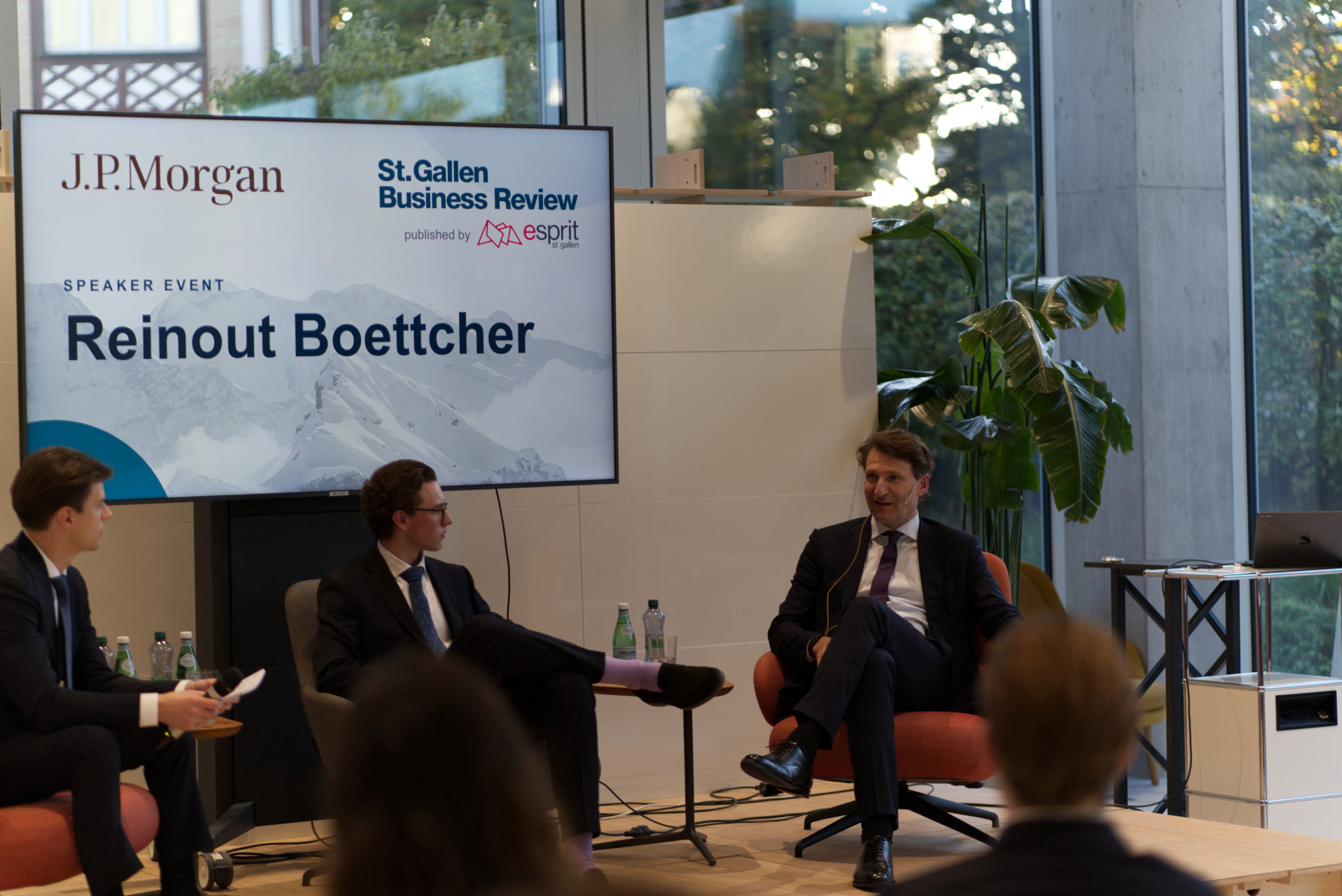
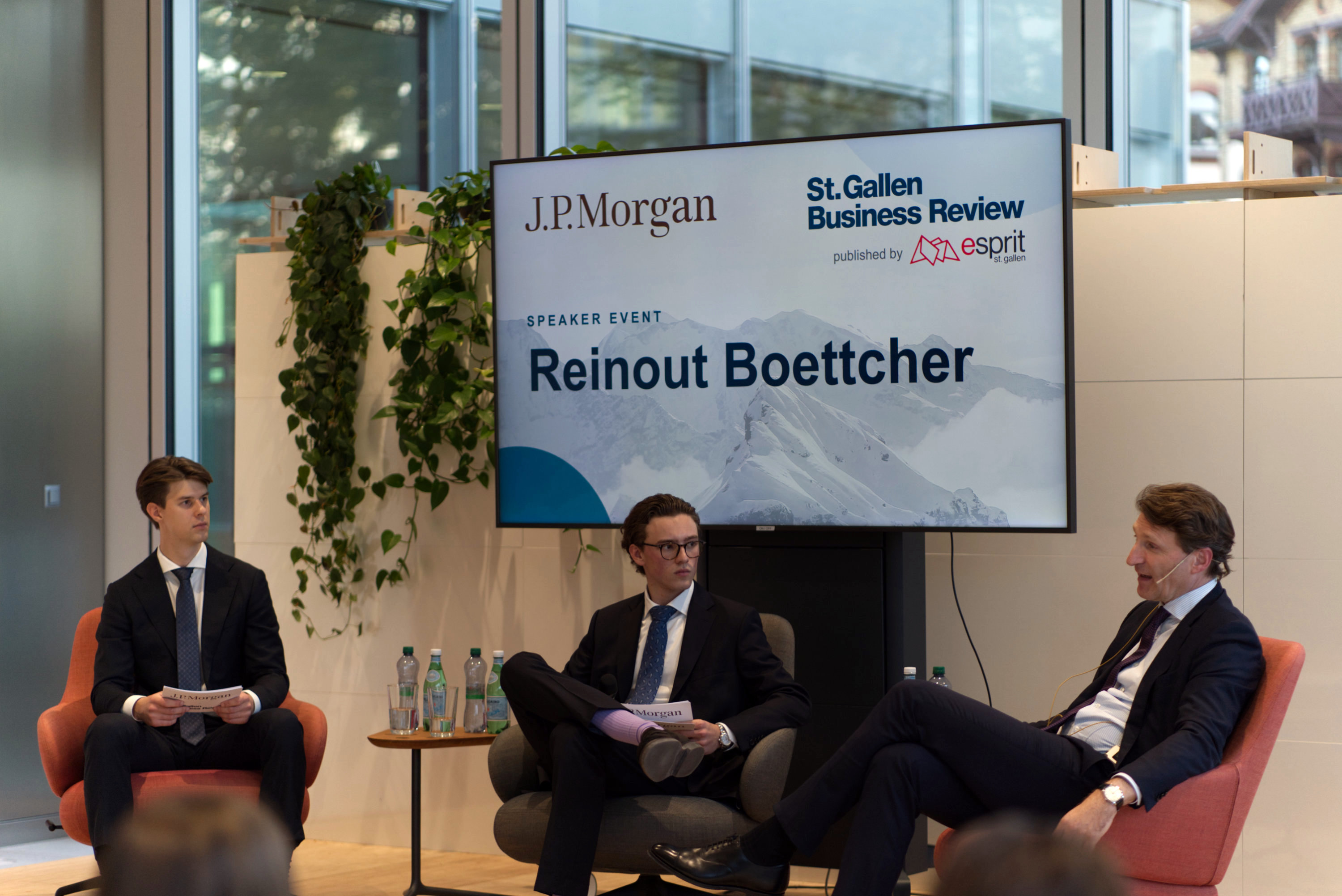
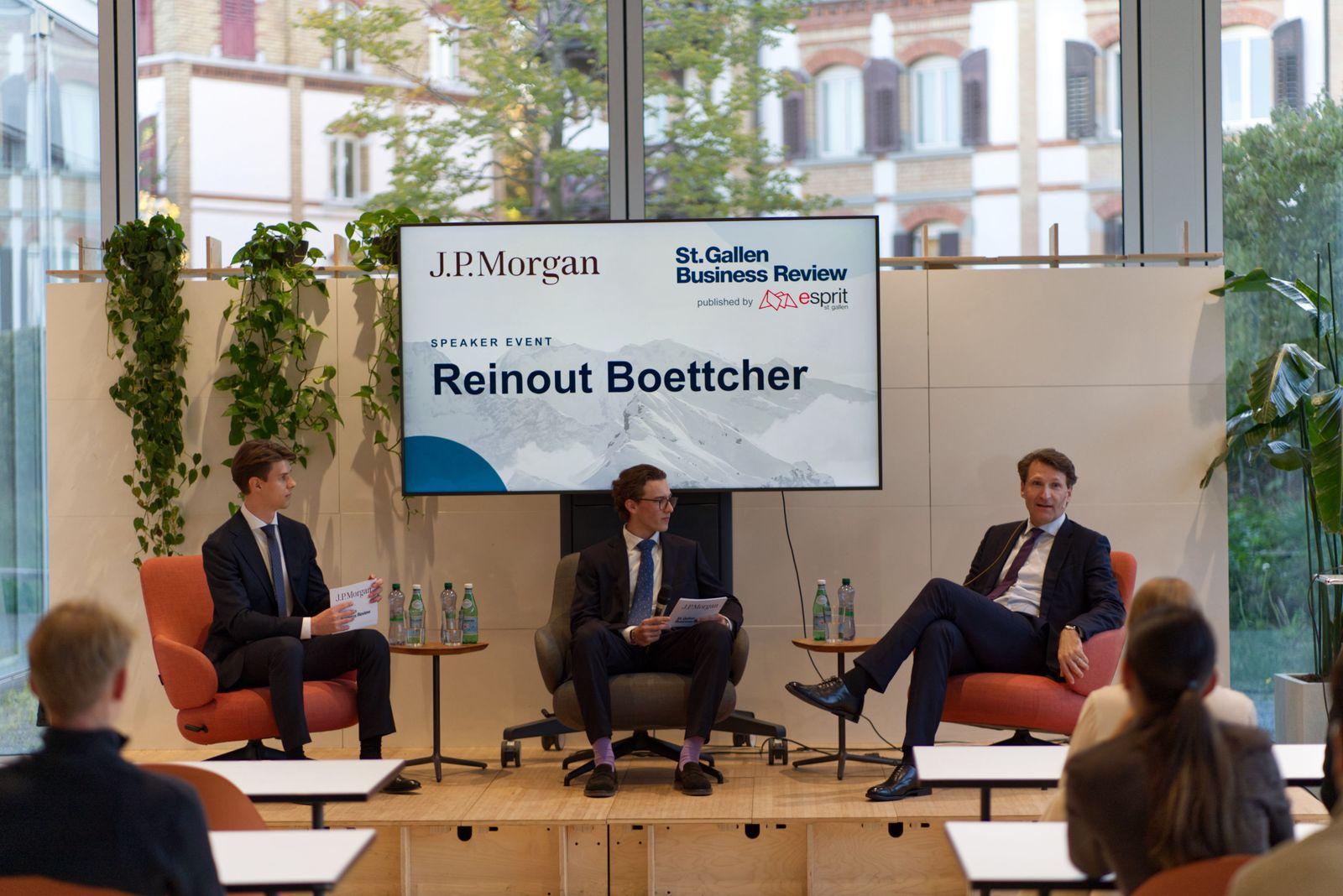
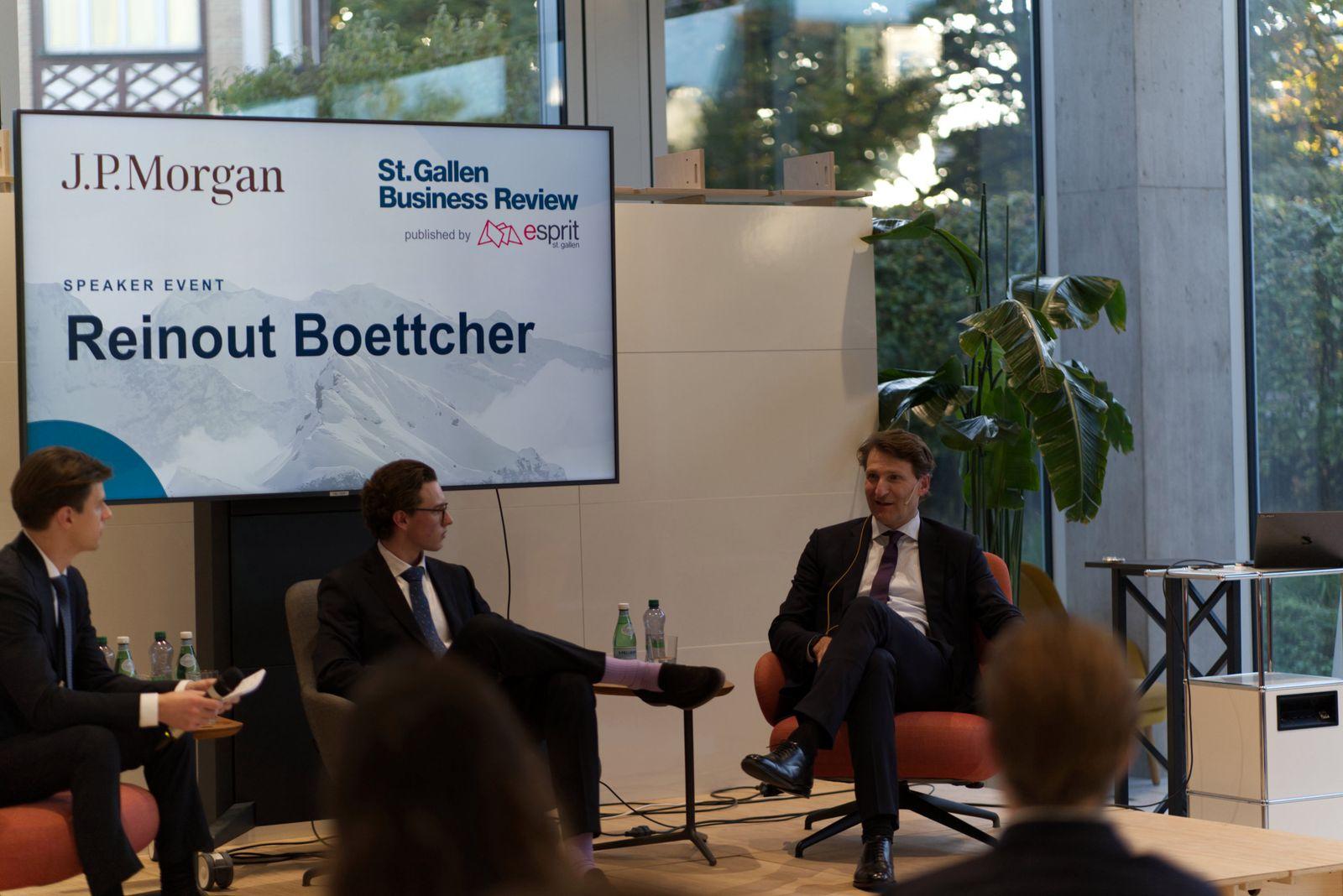
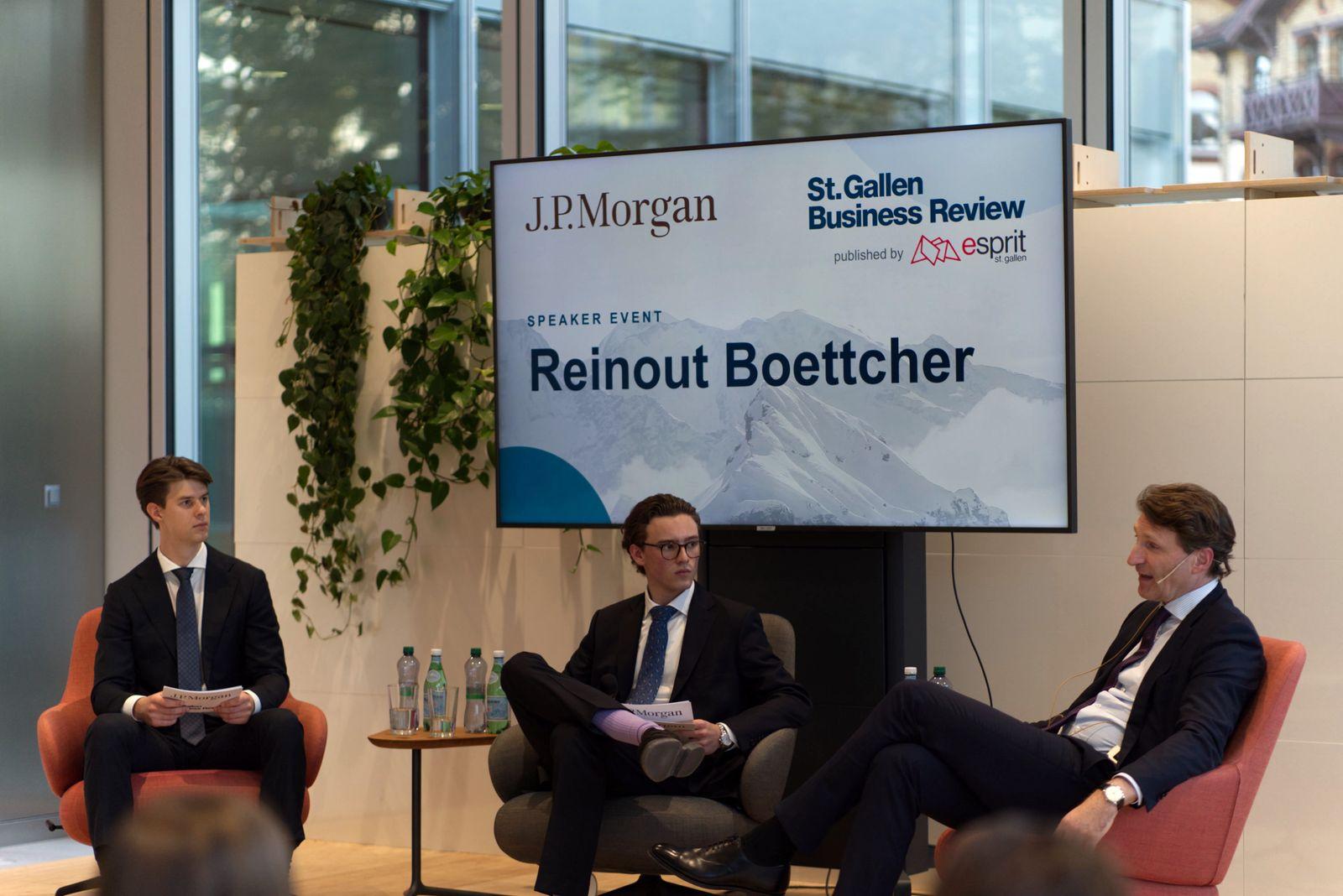
On 22 October 2026, the St. Gallen Business Review and ESPRIT St. Gallen welcomed Reinout Boettcher, Senior Country Officer for Switzerland and head of Swiss Investment Banking at J.P. Morgan, to the SQUARE of the University of St. Gallen. In a moderated conversation with Maximilian Peters and David Wittmann, he reflected on his career, the lessons of financial crises and the changing demands of investment banking.
From St. Gallen to International Banking
Returning to HSG, Boettcher reflected on a career whose direction had not been obvious during his student years. Investment banking initially appealed to him through its international reach. A conversation with the CEO of ING and an internship in mergers and acquisitions in New York helped turn that interest into a professional path.
His early experiences also exposed him to different working cultures. He recalled the demanding pace in New York, while observing that differences between institutions and sectors could matter as much as geography.

Staying Close to Clients
Discussing his move from UBS to J.P. Morgan, Boettcher explained the importance of remaining directly involved with clients as his career progressed. The opportunity to combine leadership responsibilities with advisory work suited his interests and understanding of banking.
He also reflected on how the global financial crisis sharpened attention to liquidity and preparation for adverse scenarios. For corporates, he stressed securing access to capital when it's needed, rather than trying to predict when market conditions will be most favourable.
What Makes an Acquisition Work
Turning to mergers and acquisitions, Boettcher pointed to factors that financial analysis alone can't settle but that often decide whether a deal succeeds. A company needs the organisational capacity to undertake a transaction, particularly when it is already managing internal change.
Corporate culture also deserves close attention. Differences between the businesses involved can undermine integration and prevent an acquisition from delivering its intended benefits. His reflections placed the practical work of bringing organisations together alongside the financial rationale for a deal.
Switzerland in an International Market
Boettcher discussed the changes in Switzerland’s banking landscape following the combination of Credit Suisse and UBS. As companies look to diversify their banking relationships, that opens up opportunities for other institutions, with international banks and smaller advisers each able to serve different needs.
He also highlighted Switzerland's appeal as a place to do business, pointing to its economic resilience, its concentration of major companies and its access to talent. Swiss companies often look at acquisitions in a broader international context, so domestic deals are only a fraction of the playbook.

Financing Europe’s Growth
The discussion widened to Europe's ability to finance growing businesses. Boettcher saw closer integration of capital markets as a way to widen the funding available to companies, especially those looking for substantial investment at later stages of growth. Europe's markets are still split along national lines, with different rules, regulators and insolvency regimes. A more unified market would give investors greater scale and liquidity, lower the cost of capital and give companies less reason to look across the Atlantic when they're ready to scale or list. It could also put more of Europe's substantial household savings, much of which sits in bank deposits, to work in productive investment, and reduce companies' heavy reliance on bank lending.
He also looked at the wider business ecosystem. The pull of the United States goes beyond access to capital to include the networks and expertise around companies. He pointed to Switzerland's strength in biotechnology and biopharmaceuticals as an example of how that kind of ecosystem can grow up around particular industries.
Learning and Judgement in the Age of AI
Looking ahead, Boettcher considered how artificial intelligence could change the work of junior bankers. As technology takes on more of the analytical work, younger colleagues may get the chance to work with clients earlier in their careers. At the same time, that makes understanding the underlying work all the more important, as bankers still need the curiosity and judgement to question an output and spot where it falls short. His advice to students was to put learning first early in their careers, become someone colleagues can rely on, and take the initiative.
With Thanks
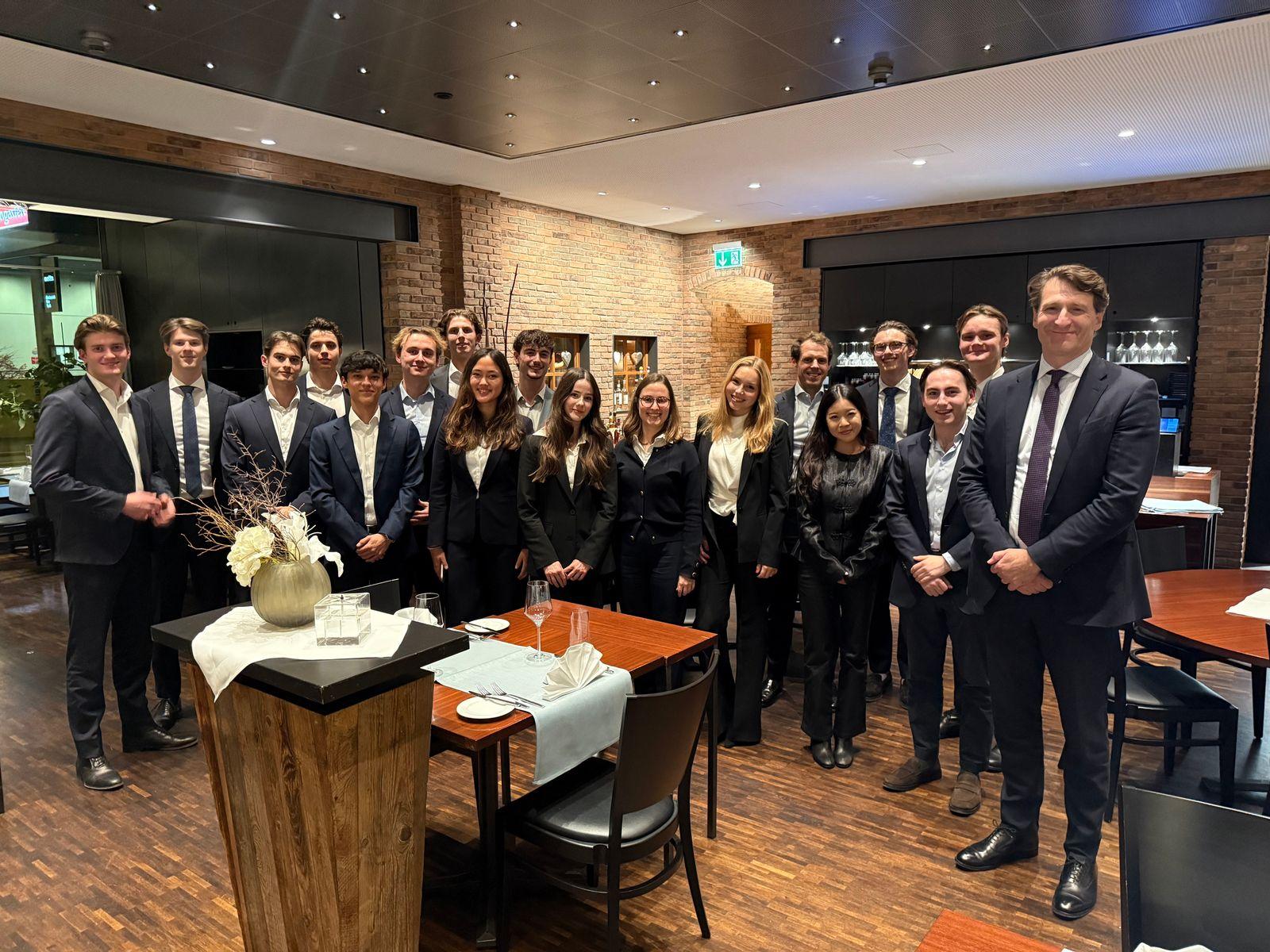
We sincerely thank Reinout Boettcher for sharing his experiences and perspectives in an open conversation with our students.
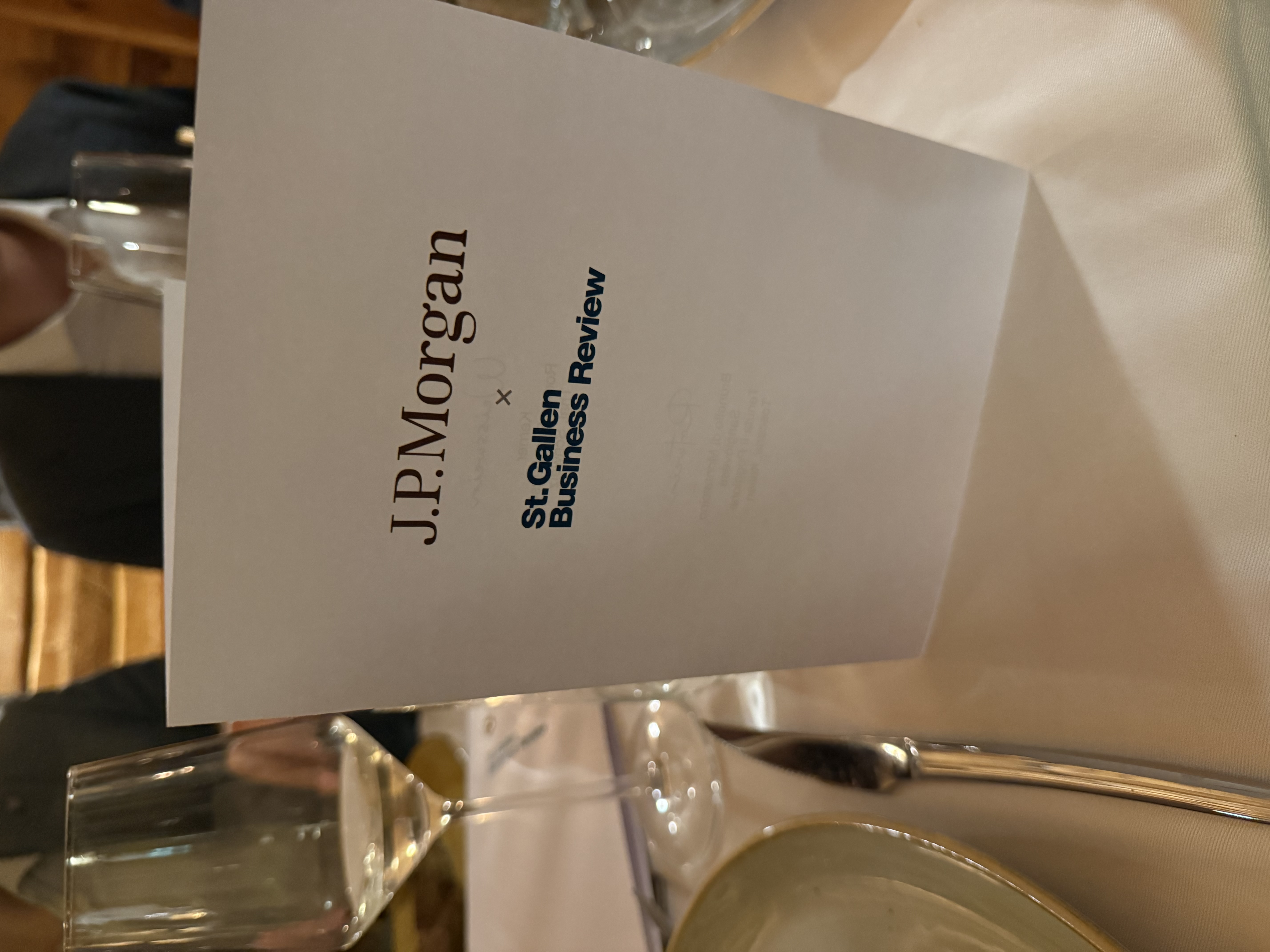
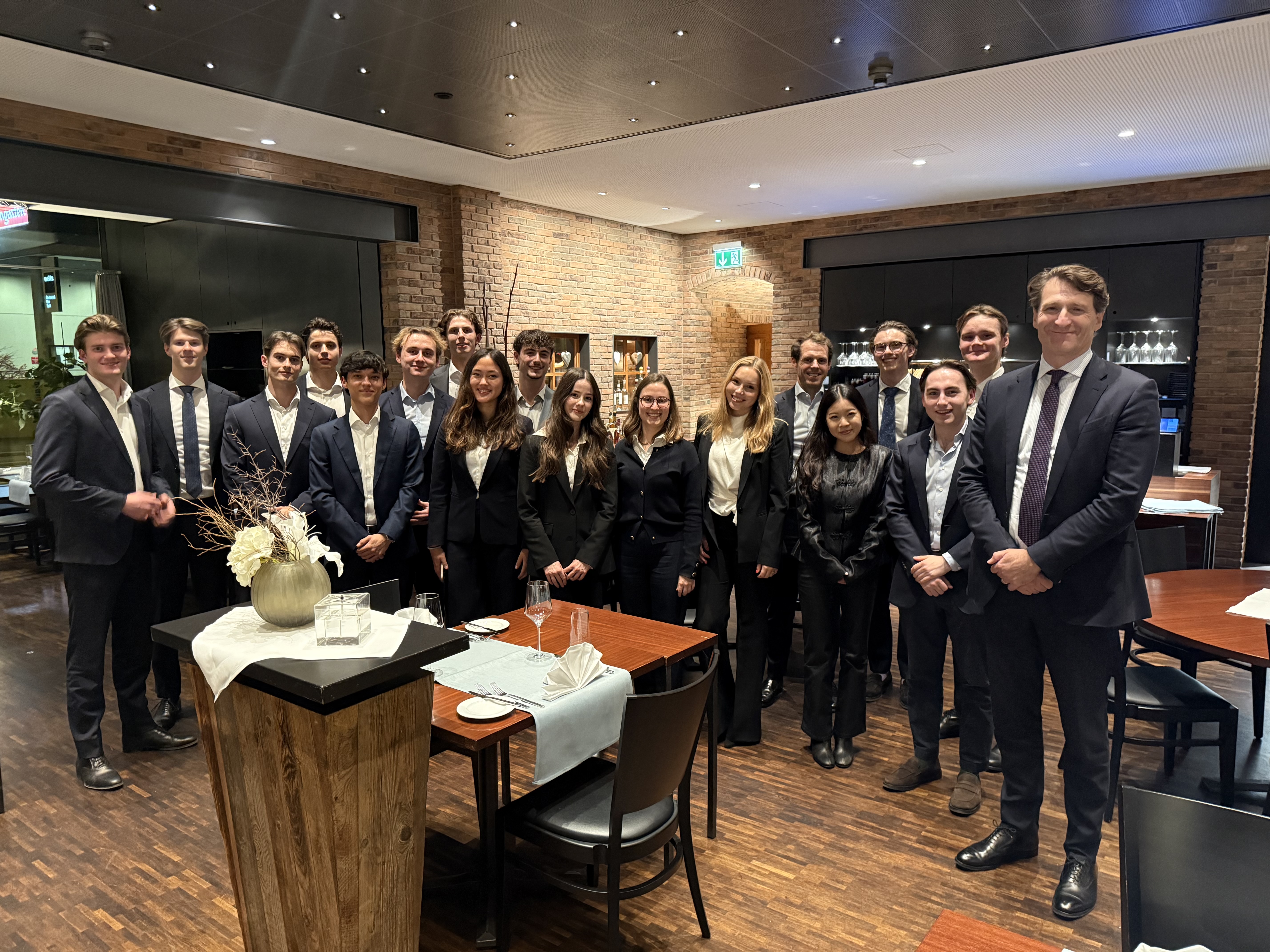
Our thanks also go to the J.P. Morgan team for participating in the event and the dinner that followed at Candela, where a smaller group of students could continue the conversation. Finally, we thank everyone who joined us for their participation and thoughtful questions.