Mr Gutenberg, thank you for taking the time to speak with us. You started out as an entrepreneur, founding the distributor Gutenberg Communication Systems, before going on to back other entrepreneurs. What has changed most in the way you assess opportunities?
The biggest change is that my focus has shifted from products and markets to people and teams. As a distributor, I needed to make sure the market wanted the products I was selling. Today, as an investor, I need a sensible captain at the helm: a CEO who knows how to pivot when necessary.
You describe yourself as a “unicorn hunter” and a “soonicorn farmer”. What does the “farmer” part mean in practice, beyond selecting the right company?
My experience and long-term view of the investment market are particularly helpful when putting together a good syndicate for seed and Series A rounds. I have friends investing all over the world and know how they work, what interests them and how they play as part of a team.
That knowledge helps me bring the right people on board and, in some cases, keep the wrong people out. We need investors who can participate in the second or third round, or find the right people and funds for Series A, B and C. Since I aim to stay with a company for 10 to 20 years, it matters who joins us for the ride.
Another part of farming is helping strategically at the exit stage. Should we go public, sell to a competitor or bring in a strategic investor with a view to selling later? Or should we keep our heads down and grow for another five years before considering those options? Having completed exits through all those routes, I can help the CEO navigate these questions.
Here, and in a previous interview with FOUNDED, you have emphasised the team and the founder’s personality. What concrete evidence helps you distinguish conviction and adaptability from mere confidence?
Speaking to founders personally is only a small part of how I form my view. Alongside those conversations, I try to speak to the people around them, whether employees, board members or people they’ve worked with before. For someone coming straight from university, that sometimes means speaking to professors or fellow students. What I’m looking for is somebody everybody looks up to, somebody who is a true leader.
Your portfolio ranges from DeepL and Mentee Robotics to Kuros Biosciences. How does your assessment of risk change across software, robotics and life sciences? Do you adapt your investment framework?
Feasibility and the possible outcome matter more to me than risk. When the potential outcome is huge, the question is whether it’s possible to get there. Even without a clear path, I’ll invest if I can see the end result.
When I invested in autonomous cars around 2000, I saw a huge market and technical feasibility, even though the chips were nowhere near powerful enough for real-time driving. We could have gone broke many times along the way, and it might never have worked. Those are risks I’m willing to take. What I try to avoid is attempting something impossible or backing a team without the strength or will to work through the difficulties.
When an investment develops differently from what you expected, at what point do you reconsider your approach?
Sometimes much later than I should. It’s difficult to give examples because people don’t like hearing or reading about their failures. But here’s one. We once thought we could add a feature to an existing product and charge for it, without realising that the margins were far too small for any sensible spending on features. The whole market was already operating on razor-thin margins, so adding features was never part of the game plan.
Had we looked more closely at the market, we would have known from the outset that there was no way in. But when you make a lot of investments, you can’t spend too long analysing each one. You have to trust the CEO to pivot when necessary. In this case, however, the CEO couldn’t, and the company went under. We made two mistakes: backing a CEO who couldn’t pivot, and betting on a market that didn’t work.
Can a great leader navigate even an unfavourable market? How do you weigh the importance of leadership against a good product or market?
Take two well-known companies outside my portfolio. In the beginning, Microsoft had a much worse product than Apple, yet it grew very quickly because it had excellent leadership. Apple, by contrast, struggled for a long time because the leadership wasn’t quite there, except on the product side.
For me, leadership always beats product or market. Good leaders will figure it out: they’ll change, pivot, enter another market or do whatever is necessary to succeed. That’s why I bet on people and can invest in life sciences as well as technology. The leader is what matters most to me.
According to the Swiss Venture Capital Report, investment volume rose by 23.9% in 2025 while the number of rounds remained broadly stable. In the first half of 2026, however, volume fell by 15.5% year on year. What do these contrasting developments tell you about confidence in the Swiss market’s recovery, particularly as so much capital is flowing into AI?
I’m probably the wrong person to ask, as I invest very internationally. Even so, a similar pattern seems to be emerging elsewhere, particularly for smaller non-AI companies. It looks as though all the money is going into AI, especially the OpenAIs and Anthropics of this world, and perhaps that leaves less for smaller companies away from the spotlight. That would be my explanation for the first half of 2026.
The situation reminds me of the late 1990s and 2000s, with a lot of money going into companies at crazy valuations. Many people will lose money, and there will be many winners as well. You have to invest in AI and participate in that business, even though we don’t yet know who the Googles, Amazons and eBays of this game will be.
At some point, I think a bubble will burst and some overvalued companies will come down. But you still have to be in the game. Otherwise, you miss out on the most important technology of our time.
The Swiss Scale-Up Report 2026 found that Swiss investors supplied only 13% of attributed later-stage capital in 2025, down from 27% in 2019–2022. What would have to change for more growth financing to originate in Switzerland?
We need bigger exits. Much of the foreign capital flowing into Switzerland comes, I suspect, from people who have already had exits and are now reinvesting in this ecosystem. What Switzerland lacks is a few big exits whose proceeds are then reinvested here.
Hopefully, that will change. With some Swiss companies doing very well, I expect sizeable exits in the next three years. If all goes well and Switzerland remains a good place to do business, that money will flow back into the local scene and fund new startups.
For founders seeking international scale, what are the advantages of building in Switzerland, and when would you recommend moving abroad?
It’s probably easier to find funding in the United States. In Switzerland, though, you have the engineers, the technologies and the intellectual property. There are many advantages to building and starting here.
LIOM, for example, has managed to bring technology and expertise to Switzerland. The country also benefits from excellent universities such as ETH and EPFL, which help drive its startup scene.
Given these advantages, I’d recommend staying in Switzerland unless you need huge amounts of capital or a large low-skilled workforce. Both needs are becoming less common in the age of AI. For most AI use cases, you can build substantial companies without raising huge sums or employing large teams, although inference costs may still require significant funding.
The EY Startup Barometer reports that AI-related startups featured in 32% of Swiss funding rounds in 2025. What distinguishes a lasting AI business from one that mainly benefits from market enthusiasm?
The difference is the moat. Are you just building a wrapper anybody could copy, a front end for ChatGPT, or are you creating a specialised AI product that customers will stick with? That means truly knowing what your customers want and being able to deliver it in a way that keeps them coming back.
With substantial capital flowing into AI and life sciences, where do you see areas of innovation that investors are still overlooking?
There are so many that I wouldn’t single out one particular sector. Opportunities are everywhere, from existing companies that could become much more efficient to new technologies and markets that exist because of AI.
I can’t think of a time in history with so many changes and opportunities happening at once. Life sciences and finance are being turned upside down. At the same time, things like AI phone assistants, which either didn’t exist or didn’t work well before, are becoming a must-have for everyone. Many companies will win in that field.
At a time when exits can take longer and liquidity matters to venture funds, could you explain how you decide whether to sell or stay invested for the long term?
I have absolutely no secrets and am happy to tell you anything I know. First of all, in many cases you can’t sell. As an investor in an illiquid company that isn’t listed on the stock market, you generally have to wait for someone to make an offer. Once an offer is on the table, the question is: would I invest at this price, or would I sell? After a few years with the company, you’re better placed than anyone to judge what it’s really worth. If you think it’s worth less than the offer, you sell; if it’s worth more, you stay invested. That’s the sensible, intelligent approach.
For funds, however, the perspective can be completely different. They typically have a ten-year life: roughly three years of investing, after which they start exiting and must be fully out by year ten. That can skew the approach. Opportunity cost also matters. Why stay invested in a company growing steadily each year if another company, such as Anthropic, is growing much faster?
These are decisions I make all the time, and the secret sauce is knowing the value of a company without having real numbers to calculate it. Since a DCF analysis isn’t possible for many startups, investors need to be able to put a price tag on the companies in their own portfolio. That’s something they should be proficient at, and they’re probably the only people who can do it.
The starting point for me is the company’s trajectory: how fast it got from zero to where it is today, how much money it needed and what that implies for the rest of the journey. Alongside that, I look at whether the market has a tailwind, is already hyped or may become so soon. Those are the two factors that influence my decision most.
It’s like crossing the ocean and stopping at an island. You look back and ask whether this captain brought you here quickly and efficiently, or whether you barely made it, and only by luck. Do you get out now, or stay on board with this captain for the rest of the Atlantic crossing, towards a whole new continent?
Looking for the next hype seems to fit your soonicorn approach. How do you identify those markets, and what signals could students spot even without your experience?
For me, it’s more of a feeling than a matter of numbers. Think of the excitement the first time you ride in an autonomous car or pay with a digital currency. You really have to feel it.
One of my early experiences with Bitcoin was sending someone bitcoins at the weekend and having them send them back. You can talk about it as much as you want, but when you do it from one phone to another and realise you can move large sums without asking a bank or worrying about banking hours, you know and feel that something is happening.
That’s why I try to get my hands on any technology I can, as quickly as possible, test it myself and ask whether it feels cool, new or good.
You have emphasised the importance of assembling the right group of co-investors. What makes an investor syndicate especially valuable when a portfolio company enters a difficult period?
You want investors who keep their cool when things get rough, rather than panicking and thinking they’re going to lose their house and everything they own. It helps if they have some experience and are used to tough times, because every startup has hard phases as well as easy ones. Connections also matter, whether geographically or within your industry. In life sciences and the chip business, it’s particularly important to have the right connections and know what’s happening.
Loyalty matters as well. You’ve probably heard that investing in a company is like a marriage, but there’s also a marriage between the investors. For example, a strategic investor might make owning at least 20% of the company a condition of coming in. Existing investors may then need to waive their pro rata rights and sit out that round to leave enough room. That only works if everyone does it.
If just one investor insists on its contractual pro rata right, it can block the whole round, however small its stake. The others may say: if that investor participates, so will I. Then everybody exercises their rights and there’s no room left for the strategic investor. That’s one situation where everyone needs to talk openly and stay loyal to one another and to the company. I could give you another 20 examples where investors need to communicate and work with the startup and its CEO. Getting this right can make or break a company.
Which long-held assumption about investing have your years as an angel investor and venture capitalist forced you to reconsider?
Perhaps I’ve underestimated the value of networks. It’s hard to overestimate what a network is worth, whether it has been built over many years or a short period. But having a network is only part of it: you also need to be able to use it.
For students interested in a career in venture capital, what practical experience would you recommend as an alternative to founding their own company?
Working in a company with 20 people or fewer is very valuable, almost a must. You automatically learn about every aspect of running a business, whether it’s a startup or an established company. So if you can’t start a company yourself, I’d definitely recommend spending some time in one of that size.
Building trust matters as well. Help investors or founders get things done, stay in regular contact and do what you say you’re going to do, and expect the same from them. Four ten-minute conversations at yearly intervals can build much more trust with an investor than one four-hour conversation, because the time between them lets you see whether words match actions.
The St. Gallen Business Review is celebrating its 30th anniversary. Looking 30 years ahead to 2056, how do you envision venture capital and investment in Switzerland and globally?
AI is already doing a lot of my work, particularly the analysis. Today, I can feed any business plan into an AI model and it will ask the same questions I would, sometimes even more and better ones. That makes me wonder whether my job will become completely redundant. Luckily, at my age, this won’t affect me too much, but I expect AI to handle much of this work in future.
Other things will still need a human touch, along with skill and creativity. There are a few things computers won’t take away from us, so concentrate on those and you’ll be fine.

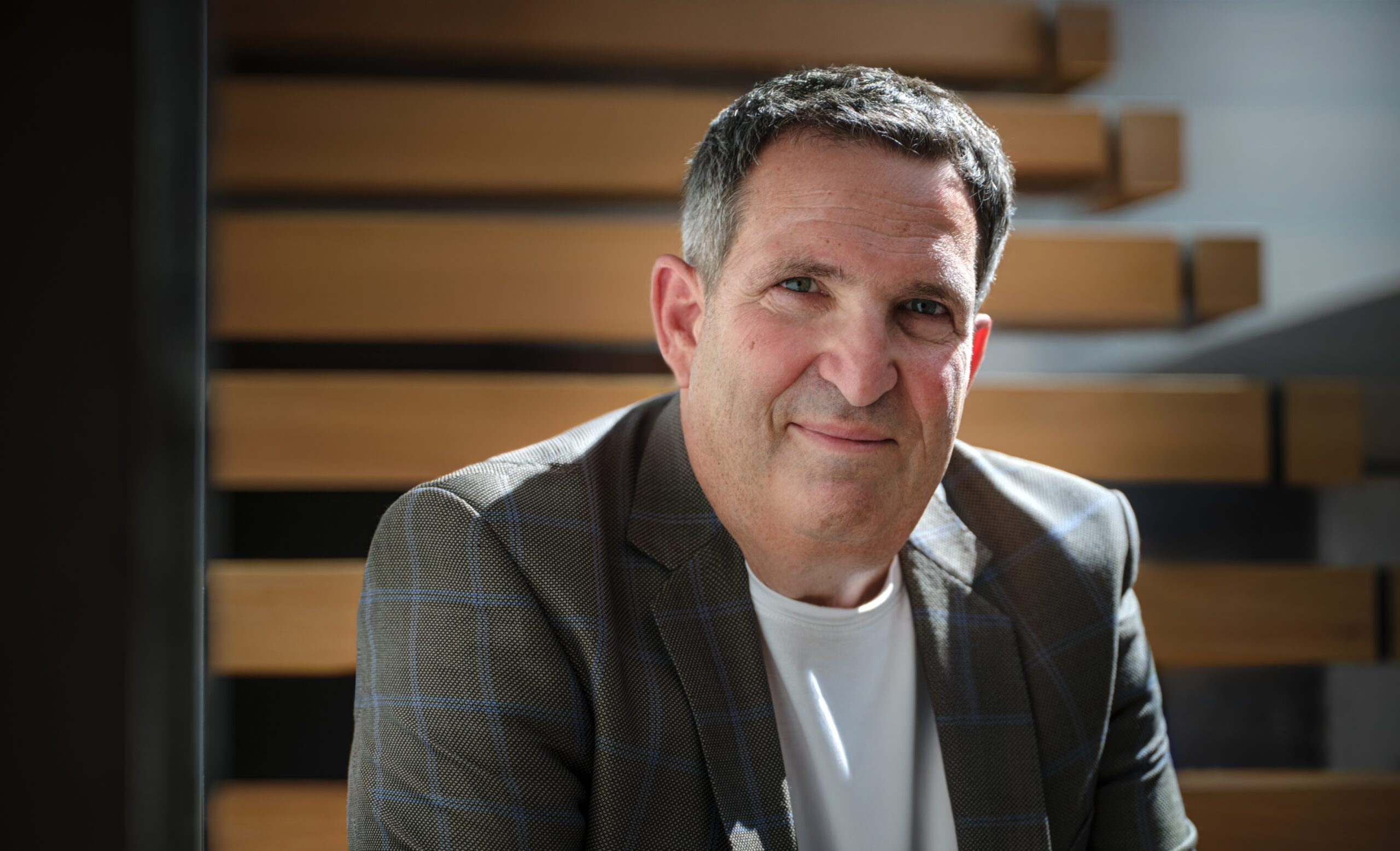
Daniel Gutenberg
Angel Investor and Founder, Hookipa
Daniel Gutenberg is widely known as Switzerland’s “Unicorn Hunter & Soonicorn Farmer” – a reputation earned through early-stage investments in 15+ current unicorns (including MobilEye, SumUp and Facebook) and a growing pipeline of soon-to-be unicorns.
Daniel serves as Board Member, acts as juror on startup juries, appears as a speaker, is spotting industry-shaping trends and leveraging his global network to connect the right people at the right time. He was named Business Angel of the Year by SECA in 2011.
His enthusiasm for new technologies and his interest in unusual ideas are almost legendary.
