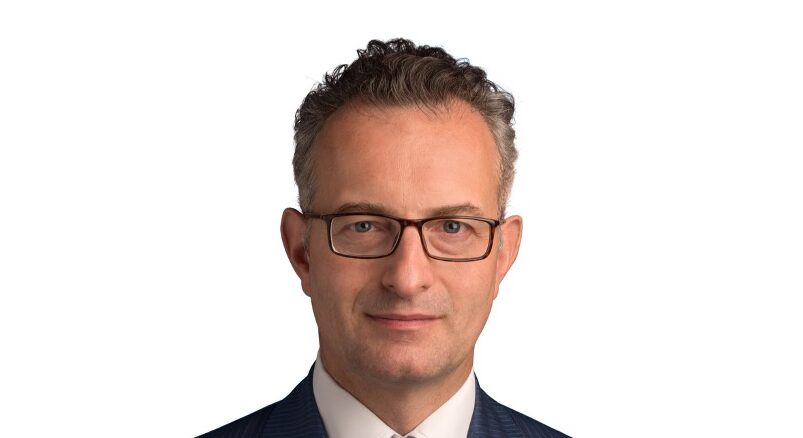

You worked at Lazard, GE Capital, Bear Stearns and J.P. Morgan before taking over as CEO of Barclays Europe in 2020, alone in a Dublin apartment during lockdown. What did that experience teach you about leadership that no textbook could?
The main lesson I would call out is that it was clearly a time when you had to be extremely resilient. You had to take the tasks you faced every day as the motivation to keep going despite the adverse circumstances. Banking is a very social job: you deal with colleagues, you work alongside them, and you improve both your work and theirs through that interaction. The fact that you could only do so virtually was tough.
The other lesson concerns risk awareness. Any crisis reinforces the lessons you accumulate over the course of your career, and for me that very much included the honing of my own risk awareness. The pandemic was a further lesson in a series of experiences, perhaps most dramatically at Bear Stearns, when I was sitting on the 38th floor of that octagonal tower. From one day to the next, the firm had to be sold in a rescue merger to JPMorgan. That was a formative lesson: you have to keep working on the solidity of the institution in front of you, because if you ever lose the measure of solidity the market expects, you should not expect things to go well.
Within all of that, banking relies heavily on people, because creating trust and solidity depends on them. It has become increasingly clear to me over the course of my career that it always mattered less what I was doing than who I was doing it with. The fact that I could learn from the people I was working with, that I could trust them, and that they could place the same trust in me created the conditions for developing both resilience and risk awareness.
Having led through both institutional complexity and crisis situations, how has your perspective on the role of banks in the broader European financial system evolved over time?
Banks remain vital – perhaps even more so in Europe. From having worked in different financial systems and having spent a long time in the US, I know that capital markets are much more developed there. Roughly 70 to 75 percent of corporate finance flows through the debt capital markets in the United States, versus 25 to 30 percent going through banks. In Europe, the proportions are roughly inverted. That means the role of banks is perhaps even more vital here than in the United States, even though banks fulfil a slightly different role there, acting for many larger companies primarily as intermediaries to the capital markets.
The trust component I mentioned earlier is critical. Banks, no matter how big or how small, all function on trust. There is not a single bank in the world that is immune to a bank run if that trust fails. We saw that in 2023 with SVB in the United States and Credit Suisse globally. Trust is therefore a very important commodity to treasure and cultivate, so that you never find yourself having to liquidate assets to create liquidity. When you liquidate assets quickly, you can often only do so at prices you would never have expected. That depletes your equity through the losses you generate and ultimately triggers the collapse of an institution. We need to be very conscious of that fragility, which is why the focus on strong banks is so important – to offset some of these risks. What we know from experience is that credit is the lubricant of a modern economy, and the absence of credit can destroy a great deal of economic activity.
That was nowhere more apparent than during the Great Depression. In the 1930s, the absence of credit was essentially what caused such a prolonged negative environment for the economy as a whole. Business models need to be flexible in response to circumstances in order to maintain that trust. We saw this during COVID-19: if you were a bank with a capital markets business and a markets business, you were able, through your markets operation, to trade the volatility created by the shocks of the pandemic. If you traded that appropriately, you could generate a degree of trading gains.
At the same time, you were able to act as an intermediary to capital markets that remained open during the pandemic, helping companies that believed – and were able to persuade investors to believe – that this would be only a temporary shock, one they could bridge through a capital markets issuance. A capital-markets-capable bank was therefore able to provide that support and, in doing so, generate revenue from the intermediation without having to rely solely on its own balance sheet.
These instances of flexibility help reassure investors that you are resilient, that you can adapt even to radical changes in circumstances. That maintains trust in the system and ultimately maintains the flow of credit.
Europeans hold only 17% of their wealth in capital market instruments such as equities, investment funds and pension products, compared to 43% in the US. Barclays has developed concrete recommendations for the EU Commission and yet implementation has stalled for years. Is this a regulatory, an educational, or a cultural problem?
In my mind, it is a mixture of all three. Europe is a much less capital-markets-enabled system. If we look at some of the structural issues, we do have a lot of savings. The ten trillion euros often talked about as sitting in idle deposits on bank balance sheets come up frequently in this discussion. The reality is that, whether you consider them idle or not, they are funding the asset side of banks‘ balance sheets. But if you believe that at least a portion could flow into the capital markets, then we would need a much more fluid system to absorb that shift from deposits into capital markets instruments.
To that extent, layering by European regulations – where we talk about method, suitability, appropriateness, disclosure requirements, and so on – is clearly creating complexity that needs to be navigated. This is complexity we as providers do not necessarily have a problem with, because we have the capacity to deal with it. But somebody who receives a highly complex document may simply be put off making an investment. They think: it is just too much work; what if I lose my money? I am being told I might lose it. I may make some return, but that is uncertain.
That leads into the cultural dimension. There is a prevailing sense that money is quite safe sitting in the bank: I know what my cash balance is. What gets lost in that perspective is that the purchasing power of those savings is being eroded by inflation over time. That should have become more apparent with the recent bouts of inflation. We had a significant episode following the invasion of Ukraine. We are likely heading toward another, unless the Middle East conflict pauses or stops very soon, and even if it does, the disruption already created is likely to exert upward pressure on price levels.
That said, there are variations. Not every culture simply adheres to a precautionary saving model. Systems like Sweden or Denmark have a much stronger equity culture. That brings me to the third component: financial literacy. We need to invest far more in helping people understand investment concepts. The studies I have seen – drawn from different sources, so they may not be directly comparable – suggest that roughly 50 to 57 percent of US adults are considered financially literate, a figure that roughly mirrors the stock ownership rate of about 60 percent. In Europe, by contrast, only about 18 percent of respondents in the 2023 Eurobarometer survey considered themselves financially literate. We can learn from systems where financial literacy, an equity culture, and an investment culture have taken hold successfully, but it would take a very deliberate effort by policymakers to drive this.
You will not be able to convert those ten trillion euros – or even a portion of them – into genuine risk-bearing capital markets investors unless you have the financial education piece in place, enabling people to absorb some of the complexity that comes with the regulatory packaging before they part with their money.
All three components matter. If you were to ask me where the preponderance of the explanation lies, I would say that with more education, people could ultimately back themselves to try their hand at investing. And with more education and greater willingness to invest, you would overcome many of the frictions I mentioned at the outset.
At Davos you said no single entity can shoulder the burden of AI infrastructure, and that Europe’s capital markets are too fragmented to do so. As very large-scale AI investment accelerates globally, what does Europe concretely need, and what role does Barclays Europe see for itself?
Do you know what a beignet is? A beignet is a fried Louisiana donut. Late last year, something happened that startled the bond markets to some extent. Meta issued 27.3 billion USD in a single bond called Project Beignet, named after the project to build a data centre in Louisiana.
It is worth pausing to consider the scale. This data centre complex is going to be four million square feet – roughly 371,000 square metres, or the equivalent of about 52 football pitches. It will have its own power provision supplied by Entergy Louisiana. All of this is publicly available information, documented in rating agency reports and other public filings. Meta was able to place these 27 billion upfront, with a single investor taking 18 billion USD of the total. The bond amortises with a final maturity of 2049 and carries a coupon of about 6.6 percent. This is one of several very large deals that took place in the US – Oracle, Google, and Amazon all completed similar double-digit issuances.
The point is that we are seeing AI infrastructure supported by a capital market that is very deep and fully capable of assessing the credit risks, the execution risks, and of pricing them and providing capacity at a reasonable cost. To put the 27 billion in perspective: the entire European commercial mortgage-backed securities market saw issuance of nine billion in 2025. One bond in the US was more than three times the whole comparable European market. Some will argue it is not a perfect comparison, but it gives a sense of scale.
The question then becomes: why was that possible in the US, and why is it more difficult in Europe? With AI specifically, at this scale, we must go back to the fundamental point that Europe is a bank-dominated market. There is a clear limitation on what any single bank can finance at this scale, because the single-name exposure limit for banks is 25 percent of Tier 1 capital. An exposure of this magnitude would need to be syndicated across a very large number of banks to stay below that limit. There have been very few comparable transactions. The only recent example that comes to mind is the syndicated loan arranged in the context of DSV’s acquisition of DB Schenker, which was about half the size of the bond we just discussed. That was a complex execution across 30 banks – hardly a straightforward template for something of this size. Would you get 60 banks to participate? The execution risk would weigh heavily on any financial adviser.
The practical consequence is that Europe is not yet as equipped as the US to execute projects of this scale through its domestic market. You would end up doing exactly what Meta did: tapping the US capital markets to support such a project. Beyond financing, Europe also faces power and grid constraints. The US can source power in gigawatts at a single location, whereas EU projects tend to be more dispersed because of grid limitations. Power is also roughly three times more expensive here than in the US. There are load caps on the grid to allow existing activities to continue functioning and to prevent a single data centre project from absorbing too much of the available capacity.
At the same time, there are exciting developments in Europe. We can see this in Northumberland, where a 700-megawatt project is due to be completed by 2035, and in Aragon near Zaragoza, where projects benefit from wind and solar power as well as strong fibre connectivity. But these projects tend to be smaller. By way of comparison, Northumberland is 700 megawatts versus 2.1 gigawatts for Project Beignet in Louisiana.
To truly scale up AI investment in Europe, you would have to solve both financing capacity and grid capacity. Financing would probably require tapping into the deep pools of international capital that support risk projects globally. I would wager that it would be hard to see all that risk retained on bank balance sheets; you would find a way of syndicating it, with bond funds buying elements of it, but the execution would be complex. On the grid side, there needs to be a major investment in European power infrastructure. This is one of the points the Draghi report called out: of the 800 billion per annum he foresees being necessary over five to six years, 450 billion was earmarked for energy and 200 billion for digital transformation. These are known issues, but the solution is investment.
European banking is often described as structurally disadvantaged compared to the US. From your perspective, what are the key structural constraints, and do you see the tighter regulatory framework primarily as a burden, or can it also be a source of competitive advantage?
The reality is that we have a fragmented market in Europe. Jurisdictions ultimately determine the asset side of banks‘ balance sheets. For example, if I issue a mortgage in Denmark, the foreclosure process will be very different from what it would be in Ireland or Slovakia. How I can recover the asset, the house I have financed, varies widely in terms of timeframes, complexity, and procedure. It starts there: a great deal of variety across the asset side, which is where funds on banks‘ balance sheets get deployed.
That fragmentation is a structural disadvantage relative to the US. With 27 different governments, it is very hard to create economies of scale. The bigger you are, the more you can move along the cost curve, reach minimum efficient scale, and ultimately become profitable because you have reached a scale sufficient to go beyond the initial investment – traversing the J-curve to a point where you can be reliably profitable on the marginal item you produce or serve. There are fewer economies of scale in Europe because of this fragmentation, compounded by layered regulation at both the national and European levels.
There is also the absence of an active and deep securitisation market, which in the US is used to recycle balance sheets. Banks originate assets, securitise them, and reload. This happens especially with agency mortgage-backed securities, where government-supported agencies underwrite mortgages taken from banks. The banks can reliably transfer them to those agencies, which then issue mortgage-backed securities. That creates an ability to recycle balance sheets far more quickly.
There is also an awareness that the US is now moving to place a specific emphasis on the competitiveness of its banks. That is the spirit behind the latest proposal around the Basel regime. From the latest reproposal, we can see capital requirements for large US banks potentially declining by around 5 to 10 percent. By contrast, under the latest measures announced by the European Commission, still only a proposal and not yet adopted, capital requirements would rise by 9 to 12 percent over time. These measures would need to be formalised and adopted quickly, ideally before the summer break. The proposal offers temporary relief, but there is clearly a desire to stay closer to the essence of the Basel Accord.
The most significant element is the output floor. It stipulates that, regardless of what internal models indicate, once transition periods are complete, risk-weighted assets as calculated by internal models cannot be less than 72.5 percent of the stated value of the assets. Capital is calculated based on risk-weighted assets, so the output floor effectively sets a minimum on the amount of capital a bank must hold. Even if internal models suggest that a given exposure is not particularly risky – that it absorbs a lot of the balance sheet on an accounting basis but warrants a lower risk weight – the floor constrains how low that can go.
The US model is now moving away from this. In the new reproposal, we see the output floor being set aside. For me, that raises a real question as to whether this will give rise to a longer-term competitive advantage for the US. While I understand that no one is keen to deregulate, there is a legitimate question about what the right amount of capital is for the exposures banks maintain on their balance sheets.
What we are seeing from the Fed, who are not reckless, but simply looking at this afresh following last year’s industry challenge, is essentially this: they need to re-examine the framework. They are concluding that they have a stress-testing regime they believe is solid, one that allows them to test banks against severe assumptions similar to those we discussed earlier. But they do not believe they need an overly punitive regime for day-to-day operations, provided there is adequate capital in stress environments. It reflects a different philosophy.
We could discuss the differences between the two proposals at length, but fundamentally it comes down to this: the US wants to look at the problem afresh and consider the benefits of a reset in light of all the other risk management tools available, whereas Europe wants to stay aligned with the original Basel proposal, including the output floor. If things stay as they are, Europe will receive some temporary relief in certain areas, which is welcome, but it will be temporary. If the US proposals remain as drafted, I could see that capital advantage persisting.
As Barclays Europe continues to grow, how do you see the balance shifting between corporate banking, investment banking and private banking, and where do you see the biggest opportunity for the franchise going forward?
I am a believer in the secular megatrend towards markets. I believe this is what Europe needs. We will have to find a way to develop European capital markets further than they are today. That reinforces my conviction that, on a secular and long-term basis, the biggest opportunity will remain in markets and investment banking, because companies need to be financed. We have just discussed the structural limitations of the bank financing model, including some of the relative limitations vis-à-vis the proposals being made on both sides of the Atlantic.
The answer lies in a stronger and more integrated capital market, and that is going to benefit banks with a strong markets and capital markets business, such as ourselves. Underpinning these needs – we have talked extensively about AI, but not explicitly about energy, though it is implicit in much of the literature – is the recognition that the energy question needs to be addressed with a view to more autonomous sources: onshore, offshore, solar, and others that are less dependent on carbon and fossil fuels. We are going to need significantly more energy.
What we see in our daily lives is that our existence is now hugely dependent on energy availability, far more so than two or three generations ago. Everything is connected. Our energy consumption had already risen substantially even before the vast additional demands of AI. Beyond that, there is still considerable work to do in terms of investment in energy, the grid, and the development of additional energy sources. I think we are going to see a fundamental rethink around nuclear energy – and that is before we even discuss defence. Defence spending is going to increase massively, driven by the recognition that our way of life is not as safe as we thought it was. We need greater confidence in our own self-defence, which means investing in our capabilities.
All of these areas can easily run into the hundreds of billions individually. Added together, the investments needed run into the trillions, and none of this will work without a strong capital market. Some of that financing may find its way into other capital markets. Indeed, one of the advantages we believe we bring as Barclays is that through the acquisition of Lehman Brothers in 2008, we have created access to the world’s deepest and most liquid capital market.
Some of these investments will need to be financed in the listed and unlisted capital markets, which are far more developed in the United States. My sense is that this secular megatrend is going to persist, which reinforces our conviction that we are well positioned to maintain our existing presence and to take the steps needed to further develop our markets and investment banking businesses.
There is also an ancillary opportunity linked to the generational transfer of wealth now under way. My parents‘ generation is beginning to transfer wealth, whether through estate planning or simply over the course of time. This is a generation that experienced a remarkable arc of wealth creation over its lifetime. As that wealth passes to the next generation, it will create new opportunities to invest, especially if we consider what we discussed earlier about how assets are allocated in Europe. Concentrations that may previously have sat largely in cash and real estate will likely become more diversified, flowing into asset management and private banking.
We remain positive on the underlying trends that support that business. Again, we feel well positioned with the franchise we have. That is roughly where this business sits in the hierarchy of our operations in terms of size and weight within the bank that I run – and roughly the order in which you will find them if you consult our annual report.
On the advisory side, what are the main benefits for clients of working with a firm like Barclays, with both investment banking and commercial banking capabilities, rather than a pure boutique adviser? Where do those advantages become most visible?
The key distinguishing factor for our investment banking franchise is that we believe we are the most American of the European banks. Through the franchise stemming from Lehman Brothers, we have retained the client base it covered prior to the crisis and prior to our acquisition, both in terms of corporate issuer clients and institutional clients who trade with us and hold prime balances with us. Many of those relationships have been cultivated over many years, and we have maintained and continued to build on them.
We have insight into the largest and deepest capital market in a way that, I would argue, no one else in our European peer group does. Some will claim it, but I would dispute that it is of the same quality, longevity, and strength. This is how we think of ourselves: the most American of the Europeans, but also the most European of the Anglo-Saxon firms. If you look at how we can be close to our clients here in Europe, and to counterparties across the continent, we have been here for a long time. This is our home. In many countries in continental Europe, we have been present for decades, and in certain countries for a hundred years or more. We have always cultivated these relationships. This is an environment we understand very well.
We must not forget that, before Brexit, the UK spent more than 40 years as part of the European Union. During that time, there was a great deal of fluidity in business between the continent and the UK. I would argue that over time, because the City of London had always been a strong financial centre, European firms increasingly tended to outsource their financial markets work to London. In this respect, we remain close to those clients. We believe we understand them well. We believe we can provide access to the US market and to global insights across technology, energy, AI, and defence – all areas of research that we cultivate, all highly topical, and all delivered with a global perspective. That is ultimately what clients value on a day-to-day basis, and they know it is backed up by a global execution capability.
As AI takes over more of the analytical and transactional work in banking, what do you see as the enduring value of human judgement in financial services, and where do you think that line will ultimately settle?
I understand that this is being read by students at the University of St. Gallen who are probably wondering: why am I pursuing this degree if AI is ultimately going to do my job? A great deal of ink has been spilled over that question. Personally, I believe there is no substitute for human judgement. Human oversight, interpretation, client skills, face-to-face interaction – we are still a very social species. We need to create trust, share ideas, develop a common plan, and deliver on it. None of that is changed by AI, in my opinion, and judgement is going to remain highly necessary.
The reality is that once you have learned how to perform a task, you can train AI to do it for you if it is repetitive and standardised. But you need to have learned the task yourself so that you can supervise it, because there is still the possibility that AI can get it wrong. I noticed that just the other day when I was using AI as a research assistant. I looked at some of the answers and thought: that does not look right. I re-verified them, consulted some internal experts, and it was confirmed that the AI had made errors. You need the human in the loop as a degree of supervision.
More of the work will be done by AI, no doubt. But you still need people who are able to perform that check and apply that judgement. What this raises is the question of how you achieve genuine learning if AI can do all of this – if, when studying for exams, all you do is ask an AI for the answer, and if you get less practice actually doing research and developing an independent perspective. That is what we have to hold on to. The problem of cognitive atrophy through AI, and what I would also describe as the risk of insufficient training, learning, experience, and judgement, exists precisely because AI is so easy to use.
This is where we have to be very thoughtful. If you can demonstrate that you are able to perform a task fully offline – can you do it? – then you can use AI to execute that task, because you are able to do it yourself and can therefore feel confident supervising the technology. I do not think you will ever be able to substitute for the value of human judgement that comes from interacting with other people who act as teachers. There is a genuine learning-by-doing element, and in certain parts of our business it is very clear that this is an apprenticeship business. You need to spend time doing some of the things that are perhaps less glamorous in order to get the right kind of exposure to how things really work in practice, as opposed to how they appear in the movies or in the latest television series.
That is really important. The reality is that it is going to feel demanding, but you are going to have to make sacrifices early in your career. There is no question about that. You need to stay hungry. It is less about how much money you make or stand to make, and more about asking yourself: am I getting the learning that will make me irreplaceable by AI? Am I becoming the kind of person who is able to exercise judgement and oversight?
What would you advise students today who want to build a successful career in financial services?
Get into the world of work. Adopt AI, but do not let it substitute for real learning. Perform that thought experiment: could you do the task if you were fully offline? If you were asked to complete an assignment using only pen and paper, could you go to the library and research it the old-fashioned way? If you can, then leverage AI to your heart’s content to do it faster – but never lose that ability, and make sure you keep training your capacity to perform tasks offline. Get into the world of work to gain that human-to-human exposure. Get yourself into the cycle of being an apprentice in an apprenticeship business. Experience learning rather than simply absorbing notions, and accept the sacrifices that are necessary early in a career. If you are not prepared to do that, then this industry is probably not for you.