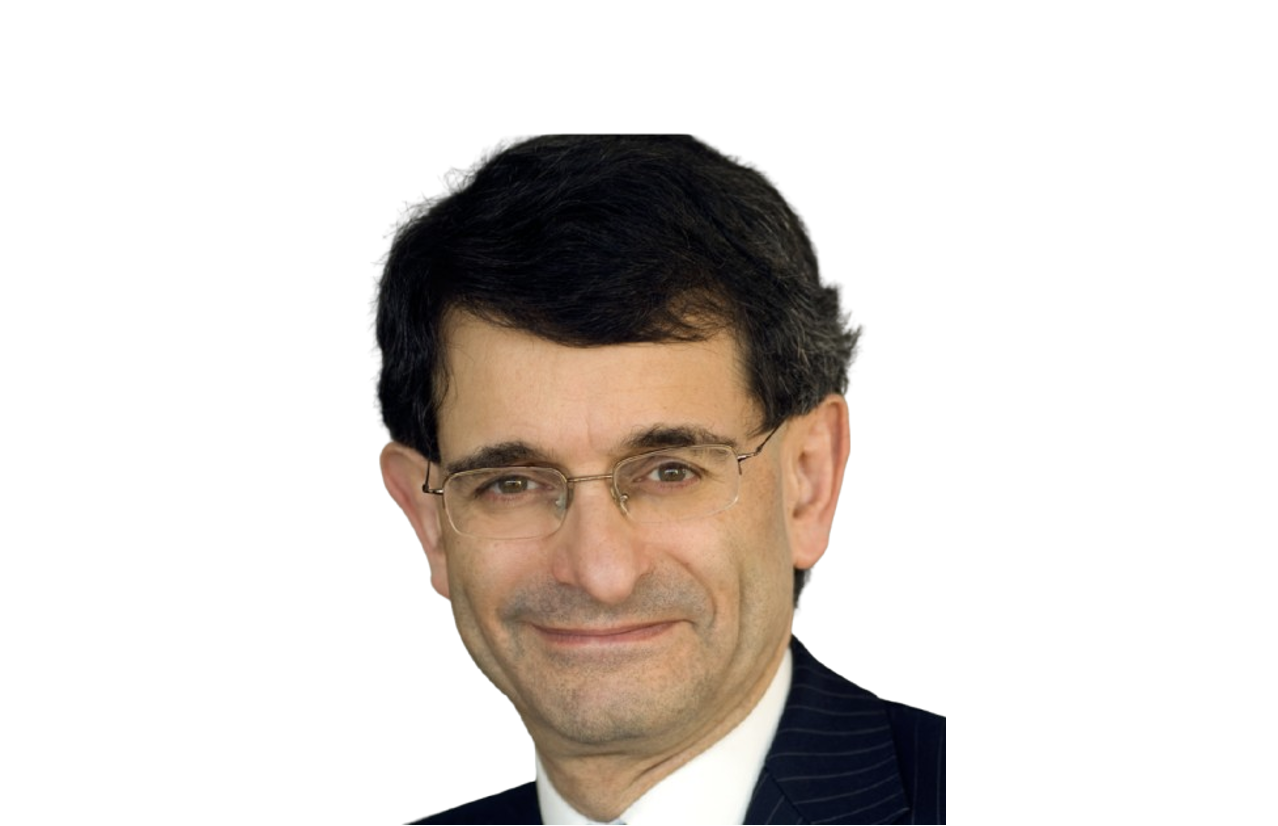

You have been closely associated with Saïd Business School for many years, especially in your role as Peter Moores Professor of Management Studies. Looking back, what initially drew you to Oxford, and how has your perspective on the role of business education evolved during your time there?
The reason I came back to Oxford, having been in Oxford for a long time before that, to help set up the business school was that the university had a notion of trying to create a distinctive business school. What the University felt should distinguish it was the notion that business schools should be more than just training grounds for business managers and business leaders, and in particular should play an important role in the activities of their economies and societies and the way in which business contributes to promoting social, human and environmental interests, as well as the performance of business. That seemed to me to be an important agenda for a business school and something that I was very much in tune with.
My view on what a business school was there to do, from the outset, was to think about it in the context of the wider social environment in which it operated. That view was greatly intensified during my period helping to set up the business school and then as Dean during the financial crisis. So, when I finished being Dean in 2011, I focused on the role of business schools in promoting environmental and social well-being and the role that business should play in society.
My view is that in essence the way in which a business school education should operate is by setting out what the purpose of a business is, discussing the notion of why a business exists, why it’s created, and its reason for being, so that students from the very start of their courses are led to think carefully about what it is that a business is there to do and what its purpose really is.
You have worked extensively at the intersection of academia, policy, and practice, for example through your involvement in the British Academy’s Future of the Corporation programme and your academic work at Saïd Business School. How have these different environments shaped your understanding of what businesses can, and should, contribute to society?
I’m very much of the view that business is a highly interdisciplinary subject, which should draw on everything across the arts, humanities, social sciences, physical and biological sciences. It’s very important that, in thinking about how one structures business research and education, one recognizes that the activity of business should be viewed in the context of it being part of the broader system in which it operates, which includes the societies, the environment, its nations, and the international context.
The work done in the British Academy Future of the Corporation programme was really trying to move beyond the conventional view that has been developing over the last 60 years, starting with Milton Friedman, the Nobel Prize-winning economist’s doctrine – the Friedman Doctrine – that there is one and only one social responsibility of business: to use its resources and engage in activities designed to increase its profits, so long as it stays within the rules of the game. That has become increasingly the prevailing view about what a business is there to do, which is, namely, to make money for its shareholders.
But that has increasingly come to be questioned, in particular as the environmental consequences for global warming, pollution, and biodiversity loss, and the social impacts of inequality and social exclusion, have come to be increasingly appreciated. The British Academy programme was really part of a large exploration as to how one should conceive the purpose of a business around its positioning in the broader societies and environments in which it operates.
We came out with the notion that what a business is there to do is to solve problems, problems that you and I face as individuals, societies and the natural world. But a business has a particular challenge in solving problems as it’s not a charity, and it’s not about philanthropy. Business has to solve those problems in a way that is commercially viable and profitable. So, the notion of the purpose of a business that we developed was to produce profitable solutions for the problems of people and planet. That idea gained increasing traction, in particular at the end of the 2010s, around 2019 and 2020, when every company was seeking to establish a corporate purpose.
How do you assess the current state of corporate governance in Europe compared to other regions, particularly in terms of balancing stakeholder interests and maintaining accountability?
Over the last five years, since this notion of the broader purpose of business began to attract greater attention and acceptance, there’s been a divergence of view across countries about its relevance and appropriateness. In the United States, during the Biden administration, there was an approach very much in line with what I was just describing, in the Inflation Reduction Act, about how to promote reductions in inflation by encouraging the growth of the corporate sector around addressing environmental and social issues. The Trump administration is taking the opposite approach, saying that all that was essentially woke capitalism and ESG-washing, and it has undermined attempts by business to move in that direction.
The European approach, on the other hand, has been to retain a focus on the importance of business contributing to, and not causing, environmental and social problems. It started off by setting that out in a series of regulatory principles: the Corporate Sustainability Reporting Directive, the CSRD; the Corporate Sustainability Due Diligence Directive, the CSDDD; and the Sustainable Finance Disclosure Regulation, the SFDR. These were attempts to regulate the way in which business operates to ensure that it profits from creating benefits, not detriments, for others.
The attempt by the EU to use this approach, which came under the general umbrella of what is termed the EU Taxonomy, encountered serious difficulties and concerns, not least from businesses, that it was undermining their competitiveness relative to other countries. In particular, in the face of the energy crisis that resulted from the Russian invasion of Ukraine, there was a pulling back from 2023 or 2024 onwards. That culminated in the Omnibus Package, which diluted, delayed, and diminished a lot of the provisions included in the Corporate Sustainability Reporting Directive and the Corporate Sustainability Due Diligence Directive. The consequence is that there is a great deal of uncertainty at the moment in Europe as to precisely what direction it is taking.
The issue that the European approach raises is a very strong reliance on regulation to achieve alignment between business interests and those of society and the environment. And that, to my mind, is not the right approach. What one really wants to do is exactly the opposite, encourage business to realize that environmental and social challenges are opportunities, profitable opportunities. The notion of the purpose of business as producing profitable solutions to the problems of people and the planet is taking exactly that approach: look at the environmental and social issues that exist as opportunities to solve those problems.
What one should be doing is to use not regulation as the primary tool, but a variety of other instruments, for example making public procurement purchasing by government conditional on companies having as their objective to profit from solving, not creating, problems for others. Coming back to the Biden Inflation Reduction Act, that was a huge amount of public expenditure involving government partnering with the private sector to solve problems in a way that was profitable and commercially viable for businesses.
ESG exemplifies very clearly what I’m talking about. ESG takes two forms. One is what is termed single materiality: companies are expected to report on the impact that the environment, social risks, and regulatory risks have on the profitability of their businesses, in other words the impact the world has on the risks of business. The double materiality view is that alongside that, one should also report on the impact the company is having on the environment and society, both through its own operations and in its supply chains. In both forms, it is essentially stopping companies from doing things and raising their costs. That’s precisely why there’s been a serious backlash.
What one wants instead is for companies to realize that, rather than focusing on profiting from creating social or environmental harms, they should elevate their aspirations, realizing that successful companies profit from solving, not creating, problems. Encourage companies to find innovative ways of solving environmental and social problems and be helped by governments in doing that.
A country which exemplifies this very well is Denmark, where companies like Mærsk and Novo Nordisk have as their objective to solve significant global problems. In the case of Novo Nordisk, the pharmaceutical company, it’s about solving the problem of diabetes around the world. Those companies see themselves as being there to solve significant problems and find innovative ways to do so using technology. That’s what needs to be encouraged.
You co-founded Aurora Energy Research, which has become one of Europe’s leading energy analytics firms. Energy markets now sit at the intersection of geopolitical conflict, the green transition, and debates about energy security. From your perspective as both economist and entrepreneur, is the energy sector a case study in capitalism failing or adapting?
It’s both. It’s failing because the energy companies have not responded in the obvious way to the two energy crises we’ve had over the last few years. In the case of the Russian invasion of Ukraine, they said, we’re going to stop the policies we were previously pursuing in relation to energy transition to sustainable and affordable energy sources. They abandoned those policies and said, in view of the shortage of energy, we’ve got to turn on the oil and gas taps again – which was indeed needed, because there was an energy crisis. But in the process of doing that, they made huge profits selling oil and gas at high prices. Instead of saying those profits allow us to accelerate the transition to renewables by reinvesting in our businesses, they paid them out in dividends and share repurchases to their shareholders.
The issue that now arises during the Iran War is, again, rising prices and increasing profits for energy companies. We have, for example, BP announcing it’s doing exactly the opposite: pulling back from its renewable activities and focusing on fossil fuels. In this crisis, we’re facing the same failure on the part of the energy companies to recognize the opportunities.
But what differentiates this crisis is that it will encourage other parties, other businesses, retail consumers, to realize that fossil fuels are not actually cheaper than renewables. And it emphasizes how unreliable fossil fuel sources are given the geopolitical risks to which they’re subject. This will accelerate the shift to renewables across large swathes of corporate and consumer markets. The businesses that are going to do best out of this are precisely the most purposeful ones – those that think about their purpose as being to solve problems in innovative ways that create profits. These are the ones that are really going to thrive.
You have argued that financial institutions, not just companies, must be central to any serious attempt to fix capitalism. Yet recent developments suggest a tension between long-term societal objectives and short-term fiduciary or political pressures. How do you interpret this tension, and what does it imply for the future role of finance?
There are two aspects to the role of institutions. The first is that the success of this notion of producing profitable solutions, not problems, hinges very critically not just on the boards and leadership of companies, but also on their ownership. However enlightened the leadership of a firm is, if they don’t have the support of their investors, then all good intentions will come to nothing. They’re going to be undermined by shareholder resolutions at shareholder meetings, hedge fund activists, and takeover threats. Companies need to have a shareholder who exerts a controlling interest and really supports them in pursuing this direction.
Coming back to the example of Denmark: the reason it’s doing so well is that it has a disproportionately large number of companies with precisely that type of ownership structure. These are known as enterprise foundations. Both Mærsk and Novo Nordisk are illustrations of such businesses. They are companies traded on Danish and international stock markets that have dominant shareholders in the form of foundations which hold a controlling interest. The Novo Nordisk Foundation, for example, owns around 77% of the votes in the company. Those owners can ensure their businesses retain a focus on their underlying purpose over the long term without being deflected by short-term shareholder pressures.
The second approach is to expect even dispersed shareholders, for example those managed by asset management firms like BlackRock, Vanguard, Fidelity, State Street, to play a significant role in ensuring that the companies they invest in create value in a form that derives from problem solving, not problem creation. If they don’t ensure that, they are exposing their investors and beneficiaries to risks of substantial costs in the future, costs from regulatory interventions and from environmental failures.
Part of the due diligence that an institutional investor plays in overseeing the companies in which it is investing should be to ensure that financial value comes from what I term value creation, and not from value transfer, value diversion, or value destruction at the expense of others. That’s not value creation. That’s, in essence, what some people might describe as theft: creating value for one party – shareholders – at the expense of another – societies or environments. The role of institutional investors is to ensure that financial value is created in the right way that reflects real value creation, not diversion or transfer.
You mentioned Denmark as a particularly compelling example of purposeful ownership structures. Given that we are based in Switzerland, would you say that Switzerland offers a similarly distinct or noteworthy model in this regard?
Yes. Switzerland has done very well over the last 40 to 50 years and the first reason is the nature of its business sector. It is one focused on building SMEs, small and medium-sized enterprises, most of which are family-owned. They therefore have precisely the type of controlling ownership structure I was talking about in relation to Denmark, except that in Switzerland it is ownership by families rather than foundations. Those are the controlling shareholders, and they can then ensure that the interests of the company are promoted over the long term.
Point number two is the nature of Switzerland’s political system, which is very devolved down to the individual cantons. That encourages relationships between SMEs and the public sector, working together to promote the development of Swiss businesses in a form that reflects local social and environmental interests. That partnership between small, medium-sized growing businesses and government is very much encouraged by the nature of both Swiss business and the political system. Although some other countries operate on a federated basis, not least Germany and the United States, in many others the political system does not function so successfully at a local level. That feature of Switzerland has contributed a great deal to its success.
Looking ahead, how do you expect the concept of the firm evolving over the next decade? Do you foresee a genuine paradigm shift in capitalism, or rather an incremental adaptation of existing models?
What I’m putting forward is not a revolution. It’s very much within the existing capitalist system, suggesting that what is really needed is an alignment of the interests of companies and their investors with the societies and environment in which they operate. The failures that we’ve observed, over the last 20 or 30 years, have arisen because of a misalignment between the purpose of solving, not creating, problems and earning profits, which often come from causing, not solving, problems. That is the issue I’m addressing.
There is a strong move in this direction because it’s increasingly being realized that this is the only way in which business can effectively function in the future. Businesses see themselves as being there to solve problems, that’s what the board meeting of a company is all about. And furthermore, it’s not just about problem solving, it’s about creating financial value from solving problems. So that appeals not only to the Chief Sustainability Officer, but also to the Chief Executive and the Chief Financial Officer, because it is relevant to their investors.
What one is observing in the US is that, because of its current administration, it’s not able to move in the same direction. But there’s a growing appreciation in America that they’re falling behind as a consequence. For example, the US is becoming seriously deficient in the competitive positioning of its electric vehicle development. That opens up tremendous opportunities for the rest of the world, not least Europe, but also Asia and South America.
China is the most obvious example of where the partnership between business and government, working to solve major problems such as electric vehicles is perceived as a fantastic commercial opportunity and is happening at massive scale and speed. This is the way in which successful economies and businesses are now moving, and it will happen at an ever-increasing pace globally, including in the US.
The next generation of business leaders is now entering the workforce. What is the one piece of advice you would give to students preparing for their future?
Follow your passion. Follow your real passion in life and what you really want to achieve. And then you won’t go wrong. As a business leader, as a business investor, as an employee, as a company, if you really stick to what you feel is important, you will achieve the right outcomes. Don’t let yourself be deflected by what others seem to think is important. Keep focused on your own purpose. The notion of a purpose of being to solve, not create, problems for others is as applicable to us as individuals as it is to businesses and institutions around the world.