
Disclaimer: This interview was conducted on 11 December 2025.
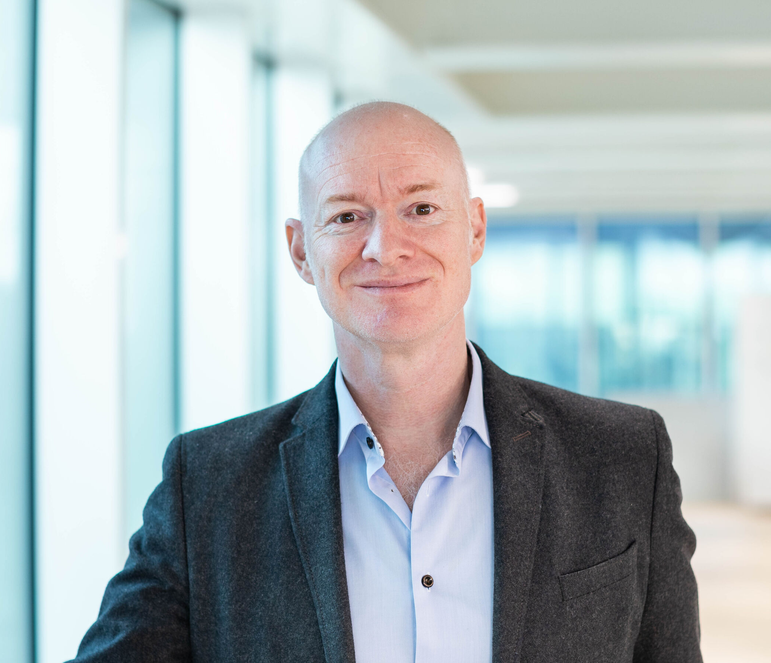
Mr. Lusardi, thank you very much for taking the time to speak with us today. To begin, we would like to ask you to briefly outline the key stages of your career that have shaped you most and to describe the responsibilities that come with your current role as Managing Partner Switzerland at Bain & Company.
I started my career in Italy at a smaller consulting firm quite a few years ago. Although it was a 30-40-person business, we worked with both very small and very large clients. That experience shaped the early part of my career, as it sparked a strong appetite for an international environment – one I was not sure I would otherwise access. I spent a long time embedded in an international team at a telecommunications client, and it was a surprise to find myself speaking English in Italy every day. That experience ignited my ambition for the big league of consulting.
After that, I pursued an MBA and joined Bain in Italy in the early 2000s, marking the second stage of my career. I worked a lot in consumer products and retail, which in Italy at the time also meant very operational, very hands-on work. On some projects, I spent time driving around with sales representatives on their sales visits and nights in factories with warehouse workers during performance improvement projects. That experience gives you a real sense of how work gets done.
In 2012, I moved to Switzerland. It was still Bain, but a different type of client: global and regional headquarters, large companies, CEOs and executives. It was, in a sense, a more rarefied strategic environment, where I could at the same time bring to the table the hands-on experience from the previous years. These three stages shaped me.
I moved here as a manager, made partner here, and later took on the Managing Partner role, with responsibility for the Swiss market. At Bain, we take on these roles on a rotational basis, in the spirit of “servant leadership” and on behalf of the firm. We do this so we can continue to focus the vast majority of our work on our clients, rather than emphasising internal management careers. The “heroes” of our firm are the people who deliver value for our clients, from both the front line and the support teams.
You could say that the role of a Managing Partner is simple, in a way, because it comes down to ensuring “only” three things: that we build an excellent team, that we have an effective commercial motion, and that our brand shines in the market. If these three things happen, we are in the right place.
Could you imagine moving back to Italy?
For some reasons, yes. Parts of my family are still there, and it is a thriving market for Bain. Personally, though, my son was born here. My wife is Italian but now holds a Swiss passport and I think we have, in a way, replaced our roots. I am happy when I go back, but whether I will return for good – maybe later in life.
You have been leading Bain’s Swiss business since 2019. Looking back, what were your initial priorities when you took on this role and how have Bain’s strategic priorities in Switzerland evolved since then?
Some things do not change. The fundamentals remain: building a diverse team and continuing to grow. When I took on the role, I thought we could double the business because there was enough whitespace to grow into and on account of the strength of our offering and our team. We are on a good track to deliver that. At a high level, those fundamental priorities have remained consistent.
What has changed is that new client priorities have come to the forefront. The most recent ones have been ESG and technology. Technology was already on the agenda earlier, but the prominence it gained in the last two or three years is remarkable. I am speaking broadly about technology, not just AI. AI is only one piece of the puzzle. We adjust to these themes as a firm and then as an office.
Another change is that cycle times have shortened significantly and disruptions have become more frequent. Since Covid, visibility into the future of business has decreased, while the frequency of ups and downs in most markets and industries has been higher. Looking back, we and our clients have had to manage unpredictable events: wars, Covid, inflation, and tariffs.
In that sense, the name of the game has remained to react quickly, adjust the pace at which we build the team, and ensure we can move capabilities across the region. Consulting is a regional – and to some extent a global – business and you need to be able to bring in expertise from wherever it sits. We have become very good at that. Technology is the big change that has remained. Today, the key question is how we take AI and broader technology to the most relevant places for our clients.
Bain highlights your expertise in several areas, particularly Consumer Products, Industrial Goods & Services, Organisation and Change Management. What drew you to these practice areas and what aspects of this work continue to motivate you today?
As often happens, part of it is will and part of it is coincidence. I majored in organisation, so that is where I started. My early work was mostly organisation design, which brings you to change management by definition. Those two things have been connected for me since the beginning.
My segue into consumer products and retail was a coincidence. My first project at Bain was for a luxury fashion house in Milan. It was a month-long project and is still memorable. From then on, I worked across a whole range of categories, from chocolate to snacks, wine, beer, pasta, personal care, camping equipment, and more.
What still motivates me to do work in consumer products and retail? It’s a very tangible business that is easy to relate to: when you walk the aisles of a supermarket, you get a very powerful glimpse of how it actually works. My wife still makes fun of me when I spend 25 minutes in front of the chocolate shelf or examine and comment on beer assortments at length. I am very hard to shop with!
What draws me to organisation is that it is ultimately about how people work together. Organisation is the most visible artefact of a company’s strategy. It is always interesting to ask: how do we make things happen? That is part of Bain’s DNA. Strategy is great, but what next? How do things fall into place?
Beyond this, across all industries and capabilities, there are two more things that keep me energised about consulting.
First, this job gives you a chance to peek behind the curtain and see how things work. We are all curious individuals, and in my case, it is about factories where chocolate is made or warehouses where beer is shipped. Second, there is the reward of building trusted relationships with clients, and the satisfaction that comes with seeing that your advice is valued and worth listening to. That is a big reward and one reason why I stayed so long.
If you could choose one different sector to work in one day, what would it be?
The dream I have not followed up on is the movie industry. I have become a movie buff. Maybe I will retire one day and become a director. Acting is out of the question.
More seriously, there is a world of media that is being revolutionised two or three times over. It is fascinating. If I had a sunset run in an industry, I would call colleagues in LA and ask them to find me a client at the studios.
How should consumer goods and industrial companies strengthen their supply chain resilience in a world marked by geopolitical uncertainty, inflationary pressure and increasingly frequent disruptions?
It is simple and complicated at the same time. For 15–20 years, supply chains were optimised, some would say, just for one number: cost. The truth is supply chain teams have optimised cost, inventory, service quality and the ability to support growth. Companies built scale and traded off proximity for global efficiency, as transportation costs were outweighed by the benefits of scale.
Then came the cold showers – not only Covid or wars, but a 10–15-year geopolitical challenge to the one-world theory.
Supply chain executives used to optimise a few variables that had to do predominantly with cost. Now they must make resilience a priority. That means designing supply chains with transportation risk in mind. That risk is hard to estimate and differs by region. The equation becomes more complicated, not absolutely but relatively compared to the past. You start compromising on the single-location theory. Proximity becomes important. Many companies have started building more factories than they would have needed under the old equation. You need additional capacity for upside and downside because you must be able to shift production. That is what flexibility really means. It is excess capacity and therefore an insurance cost.
You also need traceability. Today, executives handle similar service expectations and much higher volumes, but with a more scattered footprint. You need data, visibility and analytics. It is not necessarily intellectually harder, but it is definitely much more work.
People often struggle to assess risk accurately. Determining where risk will materialise and how much insurance investment is needed is challenging. Finance has done this well for a long time, and when supply chain work is done well, we borrow from financial risk thinking. We then translate that thinking into concrete, bricks-and-mortar supply chain solutions. That is the agenda for most supply chain leaders today.
„Results Delivery“ is a central approach of Bain’s Change Management identity. What does this concept mean to you in practice when companies struggle to execute transformations?
We do not use the term „change management“ because change for its own sake is irrelevant. It is about the results you want to achieve.
Only a relatively small percentage of transformations fail outright, less than 30 percent. But only about 12 percent achieve their intended results. The rest settles for dilution. That has concrete implications.
Companies have learned that change needs active management: a transformation office, a PMO, KPIs. These things help, but usually place you in the 50-plus percent that do „okay“. That is not where you want to be, especially these days.
One key element is time. A new strategy is a 2–3-year journey. Yet at the same time, the frequency of change has increased, so you may need to adjust again while still executing the first change. You do not want to change too many things at once. You must explain the long-term direction and what it means in concrete terms for people.
We often have visionary CEOs who know where they want to go, but the translation into what the executive team actually needs to do does not always happen. Much of our work is understanding how change affects people, what it means for each function or market, then breaking it down into simple promises and expectations. People need time to digest it, translate it and cascade it.
Ultimately, only human behaviour can change. A client has a line on the wall: „Organisations don’t change – people do.“ It is obvious but a good reminder. Do we know which behaviours we expect from people in the future? How do we help them get there? How do we track whether behaviours really change?
This is less science and more art. The prototype of a consultant with only analytics and little EQ does not work. We need to spend time understanding how people are affected by change.
That is the core of „Results Delivery“: not only tracking numbers but checking whether people actually behave differently. We used to describe this with a gym metaphor: installation, realisation and sustainment. Buying equipment is easy. Starting to exercise is harder. Sustaining is what really matters. Change only sticks when behaviours change. Everything else is transient.
As AI accelerates, many tasks traditionally performed by junior consultants are becoming more automated. To what extent do you expect AI to reshape the classic consulting pyramid and the role of entry-level consultants?
It is a question we ask ourselves often. It is a meaningful disruption, and it will change how we work. Whether it fundamentally alters the nature of the value we deliver to our clients remains to be seen.
One thing that will change is the composition of our teams. At Bain, we already have a greater share of data engineers, data analysts, prompt designers, and UX designers. With AI becoming a mass, accessible phenomenon, we need new generations of recruits to be bilingual in business and technology, and we need pure technology experts to accelerate this transition. Over time, these profiles will blend. The ratio of juniors to seniors is not different, but the mix of capabilities has evolved.
Some repetitive parts of the job will continue to be automated, as they have been for years, creating more space for creative thinking and problem solving. Behaviour change still requires understanding the context: riding with sales reps or walking the shop floor in my early days helped me come up with more effective insights that I could not have figured out in front of my laptop. That part of the job will not change. If anything, we may have more time for it.
Problem solving is also a creative endeavour, not only an analytical one and that is what makes the job fun. AI can generate ideas but creativity remains crucial. Good prompting requires thinking. I cannot tell you where AI will be in two years but I am optimistic that EQ will matter even more. If AI handles some grunt of the work, we can spend more time with people, which is the fun part of the job.
Many students wonder whether it will become more competitive to enter consulting if junior roles shrink.
It is too early to say that the shape of our team will require a smaller junior rank. The important thing for your generation is to have your own hypothesis of how you will add value. If I interviewed you tomorrow, I would ask: how do you think you will add value in this industry?
The competitive advantage in the job market, for your generation, will come from versatility. You need to be better at a broader range of things than my generation was when I joined. You will need enough proficiency in technology to know what you are talking about and demonstrate that you can learn more. You also need an appreciation of what change requires and how EQ plays into it. When I started, I only knew what I had learned from studying business: your generation is much better positioned.
If you were a business student right now, what would you do to pursue the goal of entering the consulting industry?
My own entry into consulting was somewhat accidental, but one lesson stuck with me and is what I share with new joiners – you should not only do the task you are given, but also form a view on the solution to the problem you are trying to solve.
That is the spirit of the case interview. Structure and framing matter, but curiosity and general knowledge are just as important. When working on a slide or an analysis, you should always ask yourself: if this were my company, how would I fix it? Early on, you will have the wrong answer and that is fine. It takes time.
That is what we look for in application. Your résumé will show your experiences, but you should challenge yourself to formulate how do you think you will add value – to the firm and ultimately to our clients. That is a strong starting point for a cover letter.
A personal question to conclude: is there a movie star you particularly admire?
I would rather name a screenwriter: Aaron Sorkin. He wrote the scripts for „The Social Network“, the second „Steve Jobs“ movie and „Moneyball“. He writes dialogue in a way that is musical. The initial dialogue scene in the bar of „The Social Network“ is probably the ten minutes of movie that I could watch 25 times and still enjoy it. I have a terrible memory, which is great for movies, so I can happily rewatch the same one many times. Watching movies is like listening to a song: an experience, just longer, and therefore more time-consuming than I usually have.
There is a lot to learn from professional communicators – screenwriters, playwrights, and authors. In the corporate world, we spend comparatively little time thinking about this, even though much of change management comes down to messages moving from executives to teams or from boards to CEOs. If there is one takeaway from this conversation, it is to consider how you can apply the insights of great communicators to the corporate world.