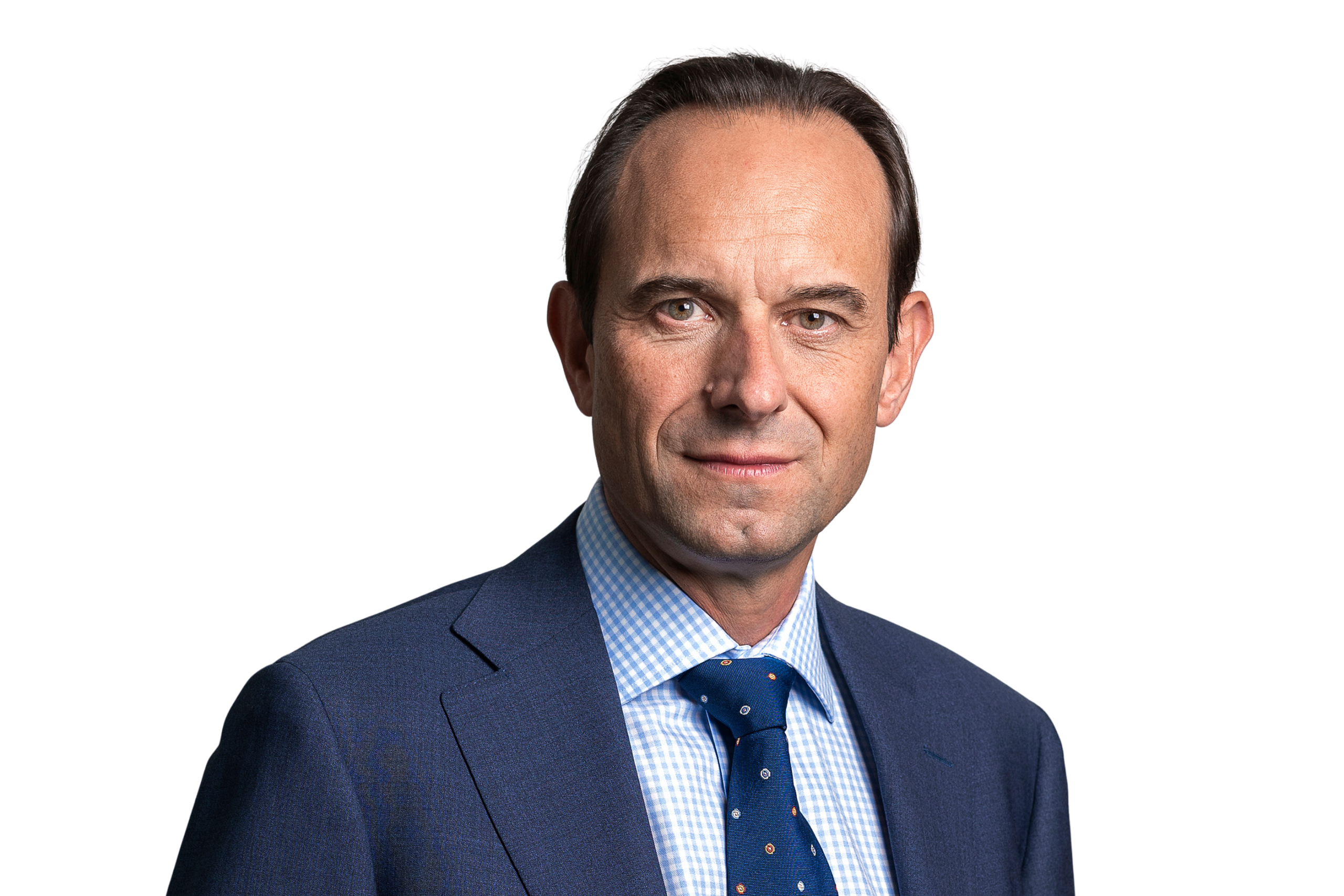
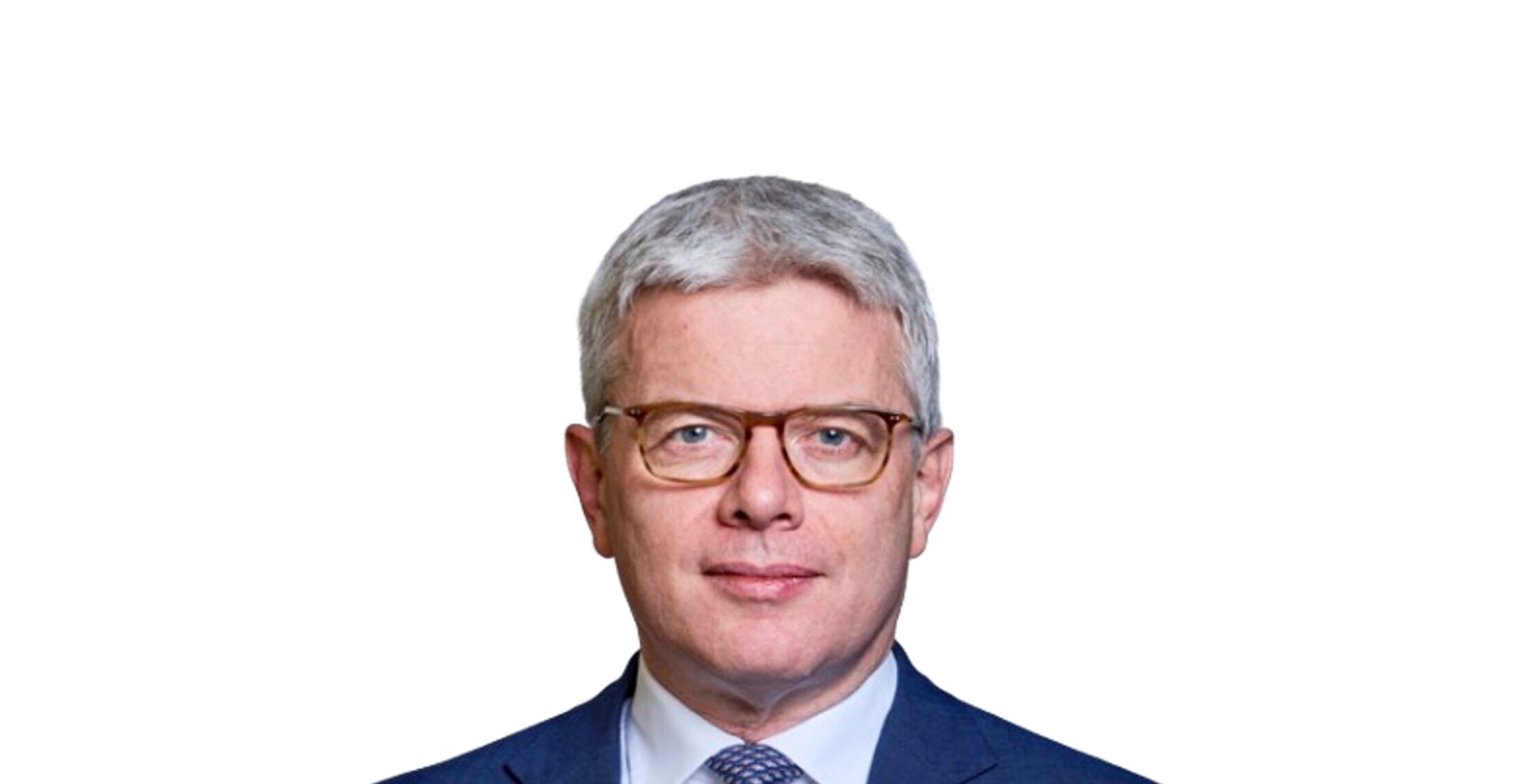
You have held roles across strategy, wealth management, transformation, and now the investment bank. Which of those stations shaped you most as a leader?
All those experiences shaped me in different ways. Running the businesses – first Wealth Management, now the Corporate Bank and Investment Bank – is one of the most exciting and complex things to do in organizations like ours. It means structuring services that convince clients to choose Deutsche Bank over all our peers, and driving the complexity of those solutions through every single day in competitive ways. For example, fulfilling the client’s request, adhering to regulation and compliance, following rules and guidance – and always better than the competition, otherwise your clients will go elsewhere.
That said, the transformation role has been probably the most defining. One of the key characteristics of leadership in these complex banking roles is resilience. The transformation of Deutsche Bank helped me understand what it means to lead under pressure. We started the transformation of the bank at the end of 2019. COVID started three months later. It was an incredibly complex exercise, and staying focused, keeping the course for an organization of 90,000 colleagues in the middle of the most stressful environment shaped my resilience as a leader. So, each of those stations certainly helped me become a more well-rounded manager.
You spent a significant part of your career managing organizational transformation under considerable public scrutiny: shareholder pressure, media coverage, regulatory attention. What is the most important thing you learned about leading institutions through profound change?
There are three or four things that I would say. Number one is clarity. The organizations that need to go through fundamental change – and Deutsche Bank had to go through fundamental change – need a clear path. It’s not just about telling people what to do – it’s starting with a clear purpose, and defining what we are here for. Why do we need Deutsche Bank? For Deutsche Bank, it’s being dedicated to our clients‘ lasting success and financial security, at home and abroad. Once that purpose is clear, everything else can follow. Having clarity of purpose has been very defining for Deutsche Bank and the transformation we had to go through.
The next piece is having a vision. What is the direction of travel? Who do we want to be? The European champion and the Global Hausbank are the definition of who Deutsche Bank wants to be. From there, you define the two pillars upon which you can build everything else. The strategy, what are we going to do? And the culture, how are we going to do it?
So, these four questions – Why are we here? Who do we want to be? What are we going to do? How are we going to do it? – have been defining for us and have probably been the thing I’ve learned the most from. Spending the time to clarify for ourselves, for our people, for what we say. Those messages become very powerful.
The second dimension is leadership. At times of such important transformation, people look up to their leaders more than ever. They look at how we behave, they look at what we say and how we say it. What’s the body language? What is the tonality we use? What is the ambition we set? Are we looking down and low on energy? Are we looking like we can and will fight for this institution? Do we believe in our own goals? That position of leadership, of extracting impact out of your people that they didn’t even think could be achieved, is something that we spent a lot of time discussing.
The third piece is culture. One thing I’ve learned is there is no substitute for the robustness of culture. If you have an organization that has defined what we stand for, what is important, what are our values, what is our belief around what we want to do, how we want to serve clients, how we want to work together, what are we not going to compromise on? The power of that message is extraordinary, and this is the most important part.
What I’ve learned is the most impactful way of building a culture is by being authentic. If people believe that what I’m saying is really what I think, what I feel, the way I wake up in the morning, come to the office and carry myself – that I want to act responsibly, think commercially, work collaboratively, take initiative – then they will believe that’s the culture we want in the bank. They will decide, do I want to act differently if that’s the culture that the bank rewards? They will see that when people behave differently to those cultural values, the bank will act upon it. Our CEO, Christian Sewing, is living and wearing that culture every day and permeating it through the entire organization, his team, the management board, the group management committee, their direct reports, the managing directors. This has made a fundamental difference in what it took to turn around and transform Deutsche Bank into a global Hausbank now competing to be a European champion.
In 2025, Deutsche Bank’s Investment Bank delivered revenues of €11.5 billion, up 9% year on year, with Q4 FIC revenues the highest on record for a fourth quarter. How much of that reflects structural improvement in the franchise, and how much was driven by a rate and volatility environment that benefited the entire industry?
The Investment Bank was indeed up 9% overall, predominantly due to the Fixed Income and Currencies (FIC) business. Our Investment Banking and Capital Markets (IBCM) franchise – the more traditional corporate finance franchise within the Investment Bank – and our Corporate Bank had more of a flat year. Overall, profitability of the franchise across these two businesses was up – by 24% in the Corporate Bank and about 20% in the Investment Bank. This reflects all the effort over multiple years to restructure the bank.
All in all, both internal and external factors impacted our performance. I’ll start with the external factors – some were negative to us. ‚Liberation Day‘ caused a tremendous amount of uncertainty and slowed down economic activity, particularly in those areas that we targeted significantly. The IBCM business took the biggest hit. We saw fee pools that in Q1 were going up, then flattened out or even diminished. It particularly affected Europe, where we have seen a contraction of fee pools. It also affected Euro-denominated banks more than U.S. banks because the dollar weakened. The combination of that was adverse.
Interest rates were also showing an implied reduction. There was clearly a view that economic activity was going to continue to slow down, therefore the implied interest rates on a forward basis fell, which does not help the deposit-taking businesses like the Corporate Bank. By contrast, the significant volatility increases that we’ve seen – particularly on currency, so in FX business, but also in rates as people started to adjust their rates expectations – benefited the fixed-income business.
We had spent the previous five years diversifying the revenue mix within the fixed-income business – not just focusing on one or two products like FX or rates, but also emerging markets, the financing business and the credit-trading business – it meant that as volatility picked up, some engines performed better than others and that gave the fixed-income business a very big run. Overall, the bank showed great resilience. The diversification has helped us to perform strongly.
These last few years have been successive years of considerable volatility shocks to which we were able to respond promptly. 2020: COVID. 2022: The Ukraine crisis. 2023: Bank crisis with Silicon Valley Bank and then Credit Suisse. 2025: Liberation Day. 2026: Iran crisis. Despite this extreme market volatility, the business keeps performing and that speaks to investments we’ve made in that franchise.
Internal factors have also contributed to our performance – not just to growth, but also to the bottom line. For example, the corporate bank in 2025 closed the year with a 15% return on tangible equity and a 62% cost-to-income ratio, which are competitive numbers. That’s because we have invested over the previous three years in efficiency, streamlining and transforming our backbone, moving to technology solutions that take much more automation into account.
All this shows how the strategy that we put in place in 2019 is paying off – because we are more efficient, more diversified and more agile in responding to changing market conditions.
In a highly competitive European investment banking market, what do you see as Deutsche Bank’s key differentiators on major transactions?
Deutsche Bank is quite uniquely positioned. We are competitive across all our European peers and, in some products, we are competitive globally, thanks to investments we’ve made over many years.
The key features are: number one, we have a global network. There are not many banks that can reach so many countries with boots on the ground, local offices, local licenses, and ability to deliver local services to clients, but also countries we can reach through our correspondent banking network, through our sub-custody activities. That matters a lot.
Deutsche Bank was founded in 1870 as a bank to support German corporates operating abroad. Our first branch outside of Germany was in Shanghai and then Yokohama. We were there to help German corporates who needed to export to those distant countries. That model remains critical. We are one of the very few banks, and the only European bank, that can reach so many geographies that are truly relevant to German corporates and to European corporates. If you are an exporter and you need to import raw materials, work them in Germany and export the goods somewhere in downstream markets, there are few banks in Europe that can offer that access like Deutsche Bank.
At a time in which there is tremendous volatility because of tariffs, foreign exchange, access to markets because of sanctions and wars, being able to provide clients quickly with solutions is critical. For example, you can no longer import copper from Ukraine, but let’s start importing it from Indonesia, or let’s start to import more grain from Latin America because there are sanctions around Russia. Having the ability to offer that network quickly, adapt the model, extend services which are technologically advanced, and make that a seamless transition for clients, is unique.
Number two, we offer unique access to Germany. We are a gateway to Europe and to Germany. This is not just catering through a global network to European clients but catering to global clients and investors with an interest in Europe. Europe is becoming more investable. Yes, the current crisis is presenting some challenges, but it’s creating an opportunity for a lot more focus on diversifying away from the Middle East and from the U.S. into the so-called old continent. We can provide that access in ways many other banks struggle to match.
We’re the number one bank in the number one market in Europe. We have the number one FIC franchise in Europe. We are one of the leading fully-fledged corporate banks in Europe. We have one of the largest balance sheet capabilities in Europe. All this fits very well.
The third advantage, which clients value a lot, is the ability to deliver the full service to them. We offer fully integrated corporate bank and investment banking services in ways that clients value. That’s what we call our Global Hausbank strategy. For example, if you are a company that wants to buy another company, we can offer them the full integration, the advisory services, the financing services. If they need to hold money in escrow, we can offer escrow services through our corporate bank. If there is a trust and agency angle, because, for example, there is some debt to be issued, we can offer the trust and agency service as well. If there is a currency angle, because something is happening across the jurisdictions, we can also provide the FX hedging. We can provide the currency hedging on a deal contingent basis. If the deal falls apart, the hedging risk is on Deutsche Bank rather than the client. We can provide the full spectrum of services. If this is an entrepreneur doing a deal and there is a liquidity event, we can help them on the private side. We can offer wealth management, family office advice. That capability of helping the clients 360 degrees is something that is increasingly valued by clients.
In the past, people found it very convenient to multiply their banking relationships and do the services with different banks. Now, trust, volatility, and the notion of wanting to bank with fewer, more trusted banks are becoming more important again. Being able to offer all of that and consolidate those services to a genuine Hausbank becomes more important.
Last point, we are investing heavily in technology. Many of the solutions we offer are becoming more technologically advanced, and they lean on some of the best products in the market. Clients value that greatly.
For example, if you are the treasurer of an exporter in Germany today, every time you buy or sell goods in certain countries, you need to call three or four banks and ask what currency exchange rate they can offer. If it’s a highly currency-controlled country, like many Asian countries are, on top of that, you need to fulfil reporting requirements, filing requirements, disclosure requirements, sometimes even withholding tax requirements, which is manual work, it’s complicated, requires local expertise, local language. Through technology, we can provide that as a completely automated service. We plug into your payments machine, so you just go into your computer, you type „I need to make a payment to Indonesia“ and automatically our tool picks up that payment, uses our fixed income FX machine to give the best rates we can possibly offer to that client, automatically does the filing, reporting, tax withholding, and reports back to the client for a fee, all on an automated basis, on a straight-through process, with no human touching it.
We benefit because we capture the fee in the Corporate Bank and the FX flows in the Investment Bank. The client benefits because they save themselves a lot of time and effort. This product is a leading technology solution called HausFX. Clients choose us because we’re investing heavily in these kinds of solutions.
Mario Draghi’s report on European competitiveness, published in September 2024, identified the fragmentation of EU capital markets as one of the continent’s most significant structural liabilities. The Capital Markets Union has been on the agenda since 2015. Do you believe it will happen this time, and what would it realistically take?
The Mario Draghi report on competitiveness is a foundational piece. It defines several levers that are needed for Europe to regain its competitiveness and the ability to win in what is a dynamic global markets environment.
The Capital Markets Union is key. The reason for it is simple. If you compare the European market and the US market, while the size is similar, they are markets which are different in many ways. We have around 450 million inhabitants in Europe, with around 350 million in the US. We have over 23 million corporates and 18 trillion of investable assets in Europe.
Why are we not enjoying an economy which is more dynamic and more invested than the US? A lot of it has to do with the fact that the funding model in Europe is still highly banking dependent. When corporates across Europe need funding, in 75% of cases they turn to banks. In the US, that’s only 30%. For the rest, they turn to capital markets, private credit markets.
Why is that? Because we haven’t had the ability to go beyond the 27 individual national markets in Europe and create a single, large, simple-to-use, predictable, at-scale capital markets union across all those nations that represent the European Union. If we were able to do that, we would be able to pool all the assets into a single jurisdiction, with a single solvency or insolvency rule, a single tax withholding regime, a single prospectus and issuance regime, a single securities regime, making it much simpler for investors to know what to expect.
Today, if you are a company in Spain and you go to capital markets, you will likely attract interest mainly from Spanish investors who understand the market, the law, the regulation, the taxes, the language. Therefore, you limit the pool of capital to a lot of small pools rather than a big pool. The number one principle in investment capital markets is the more you pool resources, the more liquidity you have, the better and more efficient the market becomes, hence why the capital markets union is so important.
What Mario Draghi achieved, thanks to his report and the many different efforts of the European Commission and other parties since then, are three important things.
Number one, the clarity that this is a geo-strategically relevant investment, and not just a technical project, is key.
Number two, he has secured buy-in for the idea of a so-called coalition of the willing. This enhanced cooperation model will enable a group of nations, including some of Europe’s largest economies, to come together and create a Capital Markets Union, if necessary, without waiting for all 27 to become aligned, move and build momentum.
Number three, a Capital Markets Union will also help us cope with another challenge which is reforming our pensions systems. Bringing pension assets into capital markets, ideally a more integrated European market, would make a big difference.
Several countries, including Germany, are starting to work in that direction. Why does it matter? Because today, many workers are working under the assumption that when they retire, the money has been put aside for their benefits and pension. The truth is the money has not been put aside. The pension funds are not funded. The money we collect today from the work of today’s worker is going to fulfil benefits that have been promised to workers down the road many years ago. And that system is not sustainable, especially when societies get older as they do across the developed world. Therefore, the systems that have moved to defined contribution systems are going to result in more focus on that investment. Because if I put 10,000 Swiss francs today in my pension, when I retire, I’d want it to have become 20,000, 30,000, thanks to wise investments.
The only way to achieve those bigger investment amounts on a defined contribution system is to have bigger capital markets where you can invest in equities. And that can only happen if a Capital Markets Union happens. When that happens – look at Denmark, look at the Netherlands – the shift towards much more capital markets use goes up dramatically.
Access to capital for companies becomes much easier. Securitisation and other mechanisms to allow for more dynamic flows of capital become much more efficient. Hence, the Capital Markets Union is, in my view, finally happening.
That’s also thanks to the effort of Mario Draghi, who has provided leadership in illustrating how this is not just a technical problem for Europe, but one of geopolitical strategic importance.
Deutsche Bank has been among the more active European banks in digital assets, having applied to BaFin for a digital asset custody license in 2023 and joined Project Guardian in May 2024. How does this fit into the broader strategy, and where do you see the most tangible opportunity for a bank like Deutsche Bank in this space?
Deutsche Bank has indeed made strategic investments in digital assets, in distributed ledger technology and new rails. That’s because we see a shift by clients in wanting to explore how some of these new technologies may be beneficial to their needs.
Deutsche Bank wants to be the Global Hausbank. We want to be a Corporate Bank and an Investment Bank that can help our clients wherever they are. We are dedicated to their lasting success and financial security at home and abroad.
Think about it: you are a large car manufacturer in Germany. You want to make a payment to your subsidiary in China. You need to make sure that the payment is instructed before 3 p.m. so that the payment can be sent onto the Swift channel before the afternoon cutoff at 5 p.m. and reach your subsidiary hopefully the next day. If it’s a Friday, it won’t arrive until Monday. Sometimes there are early cutoffs, which means the money may not arrive until Tuesday. If you want to move to a more dynamic world, clients want to see more of those new rails being used that could provide 24 hours a day, instant settlement, seven days a week, no matter what. Going beyond this, you can add programmability in a way that is hard to accomplish on traditional rails. That’s what some of these technologies can enable.
Stablecoins are a good example of an emerging technology – seeking to power real-world use cases. Distributed ledger tokenized deposits can provide that capability too. Deutsche Bank has historically provided services to clients that use those traditional rails like Swift – which is the network of messages that enable the transfer of money between banks today – to try to provide enhanced services to clients. The opportunity to supplement those rails by moving actual value, not just messages, is an exciting one.
Today, if a client wants the money to reach their subsidiary tonight and not wait until Monday, we can help. But the way we do it is by managing a lot of complexity in the background. We take the money out of your account today; we ask our subsidiary in China to move the money immediately into the client’s subsidiary in China. And then those complex payments that need to happen over the weekend, we do on our own account. We’re taking client risk; we’re taking some currency risk. The client is happy, but we must do a great deal of work in the background. That means you can only do it for so many clients.
In the future, that kind of technology enables these transfers to happen very efficiently. That’s why we must focus on them. Hence, we’re investing heavily in distributed ledger technology, including digital asset custody.
There are many different initiatives we are participating in. Pontes and Appia are two different initiatives run by the Eurosystem to provide short-term and long-term solutions to a shift towards more distributed ledger and tokenized deposits and payments across Europe and the introduction of a central bank digital currency, the digital euro. And we want to be partners to them.
We’re also doing the same for a number of US stablecoin providers because investing alongside our clients, developing the capabilities, making new technology available, being a true partner for those clients exploring this technology is a big priority for Deutsche Bank.
Deutsche Bank launched DB Lumina in September 2024, an AI research tool now widely used across Deutsche Bank, with analysts reporting time savings of 30 to 45 minutes in preparation per earnings note template. That is a meaningful productivity gain. Where do you see the most promising opportunities in banking for AI going forward?
DB Lumina was indeed originally developed as a tool to support our Research team’s capabilities, sharpening their ability to interrogate the vast amount of historical and current research we develop in the most efficient way. Since then, we’ve expanded it to staff across the entire bank. Thousands of our people now have access to DB Lumina. It’s a Gemini-powered internal language model and has revolutionized the way people interact for their corporate activities with AI.
We see AI as a major opportunity. It can streamline the way we do work and make our clients‘ lives easier. It also enables us to do faster and better risk management.
I announced at the bank’s investor day in November that we will be using AI in collaboration between the Corporate Bank and the Risk department to materially shorten the time it takes to offer a new credit, a new loan to German corporate clients. But it can also help on non-financial risk. We have a number of use cases in the investment bank of using AI for surveillance and compliance purposes to ensure that our trading stays within the market conduct requirements that we’re subjected to, or to improve non-financial risk in transaction monitoring to ensure that there are no bad actors seeking to use Deutsche Bank’s financial infrastructure to make payments that should not be allowed, whether because of anti-money laundering, tax evasion, terrorist financing, or sanctions purposes.
The exciting thing about AI is that it can shift the work experience of our colleagues. For a colleague that today is exposed to 20% of interesting value-add, insight-driven, creative work, and 80% more repetitive, homogeneous, standardized work, we can provide the ability to shift more of the latter to agents that can do that effectively, and refocus that time towards more value-add learning opportunities.
We are investing quite heavily in these solutions because we want all our colleagues to be accustomed to using AI, have education across the board, and be able to simplify work to shift more time towards more value-add solutions. The third layer is where it gets interesting.
We have a few very impactful use cases where we’re investing a lot of time and effort on, for example how to give our German corporate clients faster decisions and faster access to financing.
We want a big focus on sharing existing agent capabilities to improve the experience of clients and colleagues, and then also go for the big projects. That’s the way we think about the portfolio.
To be clear, AI is still an early technology that is developing quickly and changing every day. It’s still prone to error. It still hallucinates. It still exposes us to new cybersecurity risk and information security risk. Therefore, we are committed to looking at every opportunity we can extract from AI, but we’re doing so at a pace that will keep it safe. We don’t want to take undue risk on the development of the technology.
Citigroup’s research flags 54% of financial sector tasks as having high automation potential, the highest of any industry. As a senior leader at one of the world’s largest banks, how do you respond to that finding, and what does a strong entry into banking look like in that environment? What should students be building that AI cannot replace?
The debate on what skills, but more importantly what tasks, can be truly automated, is very important. The right way of using AI is to ask ourselves, are colleagues still doing manual work which could be replaced by agents that could do it in automated ways? Why is that question so important?
Three reasons. Number one, manual work is prone to error. It’s human nature. Nobody’s perfect, and we cannot expect perfection from humans. That’s why when you do manual, heavy work, you must always account for some manual errors, and therefore, the investment into removing maximum repetitive, homogeneous, error-prone processes that are done manually with machine work, is key. Historically, that was done through technology – you develop an application to do this, which is expensive. In the future, agents can replace that at a fraction of the cost and with a much lower investment up front, because agents can learn on the go. They don’t need to have every scenario pre-wired into the code.
The second way in which agents can help us going forward is to create efficiency in processes which historically took a great deal of human activity. The primary example is application development. We will still develop many applications. In fact, coding is a key role in Deutsche Bank. Of the 90,000 people at Deutsche Bank, about a third are in one way or another heavily involved in coding. AI can make coding dramatically more efficient because the writing, the testing, the documentation all becomes automated. The translation of historical code and legacy languages like Pascal, Fortran, COBOL, into new code and modern languages like C++, Python, can be done extremely efficiently. That’s another way in which efficiency can come into play.
The third piece is automating tasks which are repetitive, those that teach skills, but are not necessarily the most exciting for our colleagues. For example, if after your university career you choose to join Deutsche Bank in the investment bank, there could be days in which you’re asked to do an overview of a company and the very standard documents. What is the company’s name? What do they do? What are their revenues? What is their media coverage? What is their strategy? What are their comparables? What is the financial cash flow? What disclosure information is available?
These are very standardized documents, and they require a lot of digging and searching. There are some databases of charts available in DB, but you need to update them to the latest numbers. You often need to research online to verify your sources.
It can take three or four weeks to produce a good document in that sense. Now we have tools to automate that workflow with agents and reduce that work to 45 minutes. Now you can spend much more time checking the work, understanding the work, quality assuring and verifying the sources, instead of having to pull the PowerPoints together – the machine does that part for you, and you can add much more value on top.
That’s the kind of work where we will see the task reduced. It’s not the role itself. The role will become richer, will become more interesting.
But the transition will be key, because we don’t want these services to become so undifferentiated and available through any computer that humans lose the impact of providing that creative insight, that strategic insight, the critical views and the ideas of what makes a difference. For that, no technology we’ve seen today can be a good replacement.
My advice for any student reading this is that you become wise about what technology can do for you, what AI can teach you to become far more efficient but keep investing in your creative mind, in your critical mind. Develop your own ideas, your own insight, your own instincts because that’s what we will hire you for and not because you are the best user of Claude Cowork. At the same time, if you don’t know how to use Claude Cowork you would be at a disadvantage to one of your peers who has spent the time and invested the capabilities in learning how to use it. In other words, being able to work with AI tools is a necessary basis, but your creativity and critical thinking needs to come on top and will make the difference.