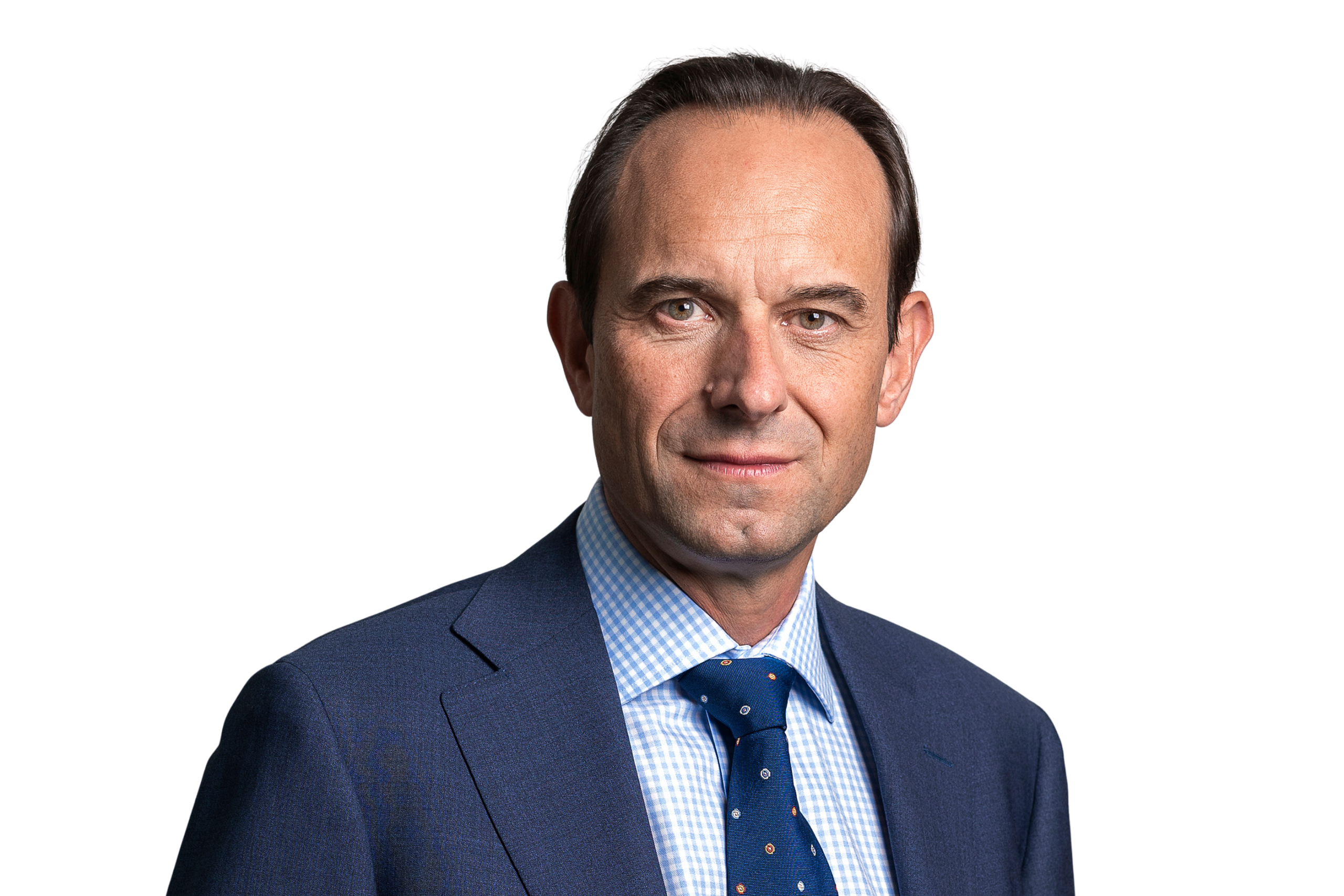
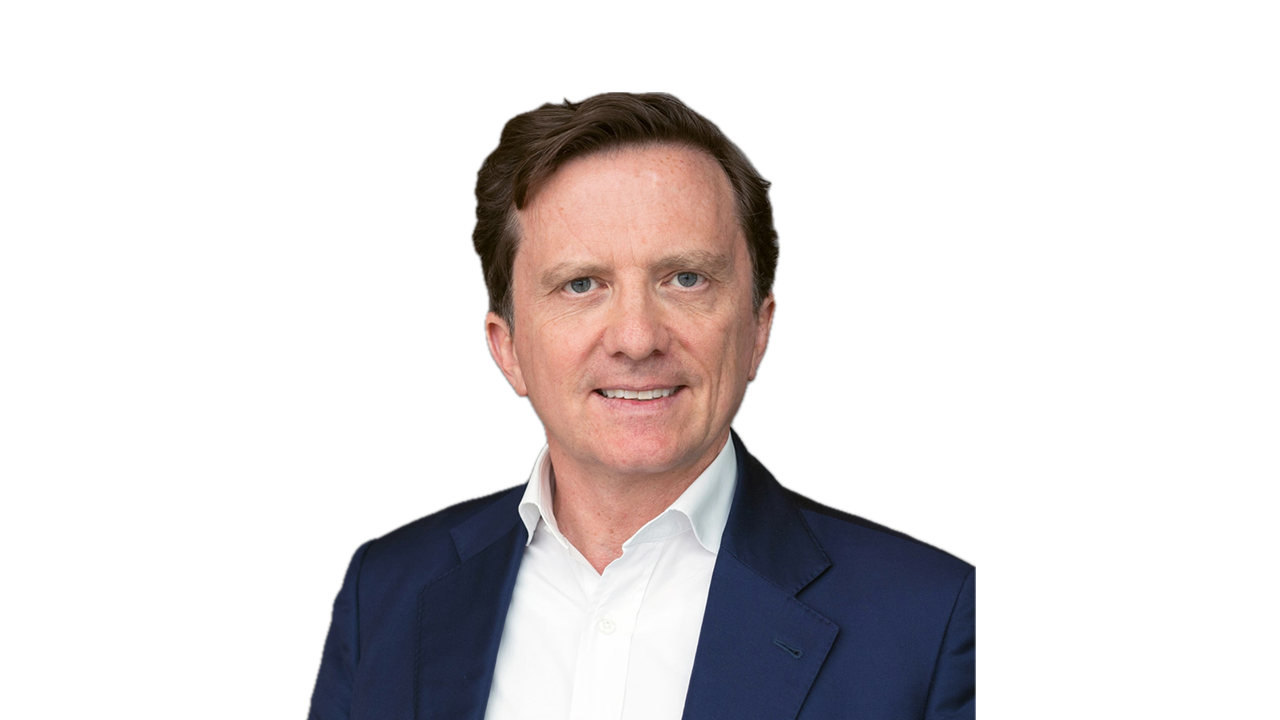
Mr. de Mallmann, thank you very much for taking the time to speak with the St. Gallen Business Review. As Chairman of Investment Banking and Chairman of Goldman Sachs EMEA, your remit today centres on the firm’s most senior client relationships, in particular the coverage of significant family-owned enterprises and family offices around the world. How would you describe a typical week in this role, and which themes are currently dominating those conversations?
Our clients are at the center of what we do, we’re a client service organization. I spend approximately 75% of my time traveling and visiting clients, focused on listening, understanding their objectives, building trust, and helping them achieve their objectives. Our business model centers on having privileged and differentiated relationships, being the trusted advisor of choice when clients have advisory, financing, capital, or trading needs. Our priority is to be in a continuous dialogue with our clients so that when they decide to execute or transact, we are the first point of call.
Regarding current themes: the world is changing rapidly, and most clients are trying to make sense of the pace of change and how it will impact their businesses. This includes the technology transformation and emergence of AI, geopolitical uncertainty, and how capital markets price these risks and how it affects asset valuations. Clients want to navigate their corporate and personal assets in this changing world while capturing opportunities created by these shifts.
You joined Goldman Sachs in 1993 and have since served as Chief Operating Officer of the Investment Banking Division in New York, head of the Swiss franchise, global co-head of the Consumer Retail and Healthcare Group, and now as Chairman of Global Investment Banking. Across more than three decades, the firm has transitioned from a private partnership into a public institution and has worked through multiple cycles of profound market and industry transformation. How has the culture of Goldman Sachs evolved across this period, and what about it has remained constant?
The firm’s core values have remained largely unchanged. They’re centered around a partnership culture. We’re no longer a legal partnership, but we maintain a partnership structure within our firm, centered on client service and excellence. Over our 157-year history, this culture has been a significant differentiator, allowing us to attract and retain outstanding people and deliver superior results through the quality of our client relationships and ability to execute.
The basis of this culture starts with our people. We seek talented, hardworking, high-caliber individuals, but the critical ingredient is our culture of teamwork and collaboration. Our people are driven and intellectually curious, wanting to win as a team. We foster significant teamwork, encouraging people to collaborate and share information. We know that we perform better and deliver better results for our clients when we work as a team.
Another differentiator is our global platform with presence in all major regions, industries, markets and asset classes. Our access to resources and information about key relevant trends, by country and industry, is very strong, giving us differentiated views and perspectives.
We maintain our partnership culture with around 400 partners across the globe. Every two years, we admit a small group of new partners following a highly selective process.
We invest substantial time identifying adequate partner candidates and creating a partner spirit within each new class.
Finally, we are laser focused on risk management. We operate in businesses that intrinsically entail certain market and counterparty risks and need to take risks on a daily basis. So we have a strong risk management culture and built in rigorous processes. We spend significant time on scenario planning, asking „what if this happened“ and „how would we react.“
Over my 33 years at the firm, these ingredients have remained constant. The firm has grown larger, more diversified, and stronger in many ways, but the underlying core values remain the same.
Having been a leader in both the New York and the EMEA investment banking franchise of Goldman Sachs, where do you see the genuine cultural differences between European corporates and family owners and their US counterparts in how they select and work with a global investment bank, and what does that imply for how a firm like Goldman positions itself differently on the two sides of the Atlantic?
At the core, the commonality is that relationships are people-based and trust-based. Whether you do business in Europe, the U.S., Japan, or China, the differentiator is the quality of the relationship, the trust built within it, the credibility of the information exchanged and an ability to deliver results. That is the common denominator.
In Europe, especially for family-owned businesses or where you have long-term shareholders, the focus is very much on durable, trust-based relationships. They value a long-term commitment beyond individual transactions and can remain non-transactional for extended periods, while appreciating sustained coverage and service.
Long-term family owners, in the U.S. as well as in Europe, typically seek to preserve and maximize value over long time horizons, taking considered risks, and preserving the enterprise for the next generation rather than maximizing short-term opportunity. That is a common feature across most family-owned companies globally. By contrast, public companies without a long-term anchor shareholder are often more exposed to public market pressures, including quarterly reporting, which can sometimes encourage a shorter-term focus and greater volatility.
Ultimately, while business and many industries are global, individuals come from specific countries and regional backgrounds, with distinct languages and cultures, and remain very local. Our model is therefore to build relationships locally and be embedded in the social ecosystems where ever we operate, while offering clients added value by bringing new ideas, content, and insights on global macro, industry and business trends. It starts with being part of the local fabric, understanding how people think and behave, but always delivering added value with a global mindset.
This is our approach across all our businesses. I did it myself in Switzerland for a number of years, and being on the ground and invested in the local community is extremely important.
Global M&A volumes nearly reached all-time highs in 2025, and Goldman Sachs‘ 2026 outlook expects the momentum to continue. Looking specifically at your European pipeline, what do you see as the most decisive driver of this momentum at present?
M&A activity is very strong. Global M&A volumes year-to-date as of end of June stand at more than $3 trillion, up 51% versus last year and 51% versus the five-year average, a significant increase. In June, Goldman Sachs advised on over $1 trillion in announced M&A volume year-to-date – which is the fastest start to any year ever and the first time any bank has reached this milestone in the first half of a year.
The M&A cycle typically runs five to seven years, and we’re in year three of this cycle. There are uncertainties that could slow it, but currently we have favorable ingredients: CEOs who are largely confident about the future, as M&A volumes are highly correlated with CEO confidence, overall healthy valuations that encourage sellers, and very supportive financing markets with buoyant access to capital.
We’re seeing activity across all sectors in Europe, the U.S., and Asia, with many significant headline transactions. One big source of activity this year has been the corporate sector. The first quarter saw a record number of transactions larger than $10 billion from the corporate world.
An important overlay across most industries is that companies have realized that scale matters. In an uncertain and rapidly changing world, being diversified matters. Many companies are trying to get bigger, stronger, and more diversified geographically and across industry verticals. That’s been a key driver of this activity.
From 2014 to 2017 you served as global co-head of Goldman Sachs‘ Consumer Retail and Healthcare Group, in a period defined by the ascent of the Chinese consumer and the rise of premium and differentiated brands. A decade on, the European luxury sector faces a markedly different reality: Kering reported a 13 percent decline in sales in 2025 and the Chinese consumer recovery has been notably uneven. Which of the assumptions that defined that earlier decade have proven most resilient, and which require fundamental rethinking today?
One of the most long standing assumptions is that the U.S. remains the largest consumer market in the world, with a very resilient consumer. Even in times of uncertainty, U.S. consumer demand has remained strong, underpinned by the strength and innovation capacity of the U.S. economy. It has consistently been a very attractive place to deploy capital. And it has consistently outperformed other economies.
China has experienced an enormous increase in the scale of its economy over the past decade, and its pace of change and ability to innovate are in a completely different place today than 10 or 15 years ago. From a consumer perspective, however, the picture has been more uneven, with a less deep internal consumer market and a different market mix. We remain cautiously optimistic that as China continues to perform economically, the consumer base will be lifted by improving economic conditions.
In luxury, the high-end customer segments have continued to outperform. Within luxury, hard luxury has been the best-performing category over the past year, ahead of fashion, spirits, beauty, and other segments. Globally, and especially in the U.S., wealth effects have been a major driver of demand for luxury goods and have supported very strong growth in the luxury industry over the period, even if that growth has recently slowed somewhat.
Goldman Sachs‘ 2026 M&A outlook describes artificial intelligence as an „innovation supercycle“ that is reshaping not only AI-native firms but also software, semiconductors, real estate, power, and data centres. From the perspective of the boardroom, how is AI changing the conversations you have with European industrial CEOs and family owners regarding portfolio strategy, namely what to acquire, what to divest, and where to consolidate existing positions?
AI is absolutely transformative and a major source of productivity and efficiency gains. Many people compare AI to the rollout of the internet, which fundamentally changed how people live and work. We believe AI’s power lies in its broad applicability across both consumer and enterprise use cases.
The difference to previous technological shifts is the speed and scale at which AI is developing. The technology is evolving very quickly, and the range of use cases is expanding across sectors, so AI will add value virtually everywhere.
At the same time, there is still uncertainty around the AI value chain and who will capture most of the economics, whether it is the AI model providers, the data center and infrastructure players, or the software companies that will build AI-driven applications. The split of that value pool remains open.
If you sit in the U.S. today, you see the sheer scale of the build-out: the amount of capex deployed is unprecedented, and the speed at which new models are launched and capacity is added is extraordinary. Most CEOs want to discuss AI. Many companies are piloting AI across their organizations, while others are more advanced, using their data sets to increase productivity; some are still in earlier stages. There are significant differences by industry.
What is clear is that the technology is improving rapidly, and everyone has to adapt. We are also adapting internally, rolling out AI across many of our own functions and identifying where we can gain efficiencies and improve how we work by using AI.
You ran Goldman Sachs‘ Swiss franchise from 2002 to 2007 and remain one of the most senior bankers of Swiss origin in global finance. Three years on from the emergency takeover of Credit Suisse by UBS, the Swiss financial centre has been fundamentally reshaped, with one global universal bank where there were two. From your vantage point at Goldman Sachs, what does this new landscape mean for Switzerland’s standing as an international financial centre, and how is it altering the strategic options available to Swiss corporates and family owners today?
One thing that has been constant since I graduated from St. Gallen to this day is that Switzerland has remained one of the most stable and predictable economic environments globally. That may sound obvious, but compared with most other countries, including many neighboring European countries, Switzerland has benefited from being an island of stability overall, which has supported not only the Swiss economy but also the Swiss franc and many corporates who operate from Switzerland.
Switzerland’s GDP per capita is among the highest globally and, while growth has been modest in recent years, it has continued to outperform the rest of Europe. Switzerland manages just over a quarter of global cross-border wealth, which is an enormous asset base. Asset and private wealth management are therefore central core businesses for Switzerland and benefit from the country’s stability, political environment, and neutrality.
Switzerland has always had, and still has today, a real leadership position in these industries. The Swiss stock exchange is the third largest in Europe, with over 250 listed companies. You have some iconic, outstanding global companies listed there, as well as a regular flow of high‑quality companies that choose to go public in Switzerland.
I am not only positive but remain optimistic that Switzerland will continue to position itself as a very stable, resilient, safe‑haven environment in a world affected by change and greater uncertainty. In a paradoxical way, as uncertainty, whether political, geopolitical, or otherwise, increases around the world, Switzerland tends to benefit because of its safe‑haven status. I do not see that changing in the foreseeable future.
As far as Goldman Sachs is concerned, we have been present in Switzerland for more than 50 years and it is a key growth market for our European franchise. Last autumn, we opened our new office building in Zurich and we continue to see solid growth potential in the region.
You graduated with distinction from the Hochschule St. Gallen and the Community of European Management Schools in 1992. Looking back, how did that European-rooted business education shape your path into global finance, and does it still inform the way you advise clients today?
I would say the main thing I learned in St. Gallen is to focus on what is essential and to work hard and with attention to detail. When I arrived, I barely spoke German, and I had to become fluent and study in German as a non‑native speaker. It was a period of very hard work. You are asked to review, learn, memorize, and process a lot of information, much of which, I would say, I have completely forgotten.
Whether you forget quickly or not, you learn how to handle a significant workload, multi-task, organize your thoughts, analyze, and be efficient with your time. I have clearly benefited from that experience. Many of the techniques, processing skills, and the ability to analyze, review, memorize, and summarize large amounts of information come from the building blocks of that education.
I also benefited from the fact that, although it is a German‑speaking institution, it was very pan‑European. I was involved with the International Students‘ Committee (ISC) and many different activities, and I did various internships around Europe. You realize that there are significant cultural differences across Europe that really matter for how business is done and conducted.
For all those who can be critical of Europe today, I would say Europe has incredible attributes and a strong talent base. While there are regional differences, Europe is very resilient. For people, many of whom we try to hire and attract, who can navigate these differences and adapt their communication style and language, there is a great future ahead. And, by the way, even with AI, there is a great future ahead, because nothing will replace the human interface and the ability to navigate cultural differences.
You made Partner at Goldman Sachs in 2004, just over a decade after graduating from the HSG, in an era of finance that looked very different from today. The pathways into senior finance have since multiplied, with private capital, fintech, and AI-driven roles reshaping what a career trajectory can look like. If you were starting your career in 2026 from St. Gallen, would investment banking still be the most compelling choice, and why?
The short answer is yes. When I graduated from St. Gallen, I had firmly decided that I did not want to be a banker. Before I joined Goldman Sachs in 1993, I met two senior partners, explained all my reasons, and they said: “Those are great reasons, why don’t you come to London and meet a few people?” I went to London, met several people, and thought that, one after another, they were smart, driven, very team‑oriented, just great individuals, who stood out versus anyone else I met elsewhere at the time.
I was interviewing across many industries and thought that perhaps banking was not such a bad choice after all. And here I am, 33 years later.
What you get in Goldman Sachs Investment Banking is a very intense, hard‑work experience that gives you a window on the world, not only on finance, but on the world at large, because the organization and the business are at the heart of change. You see change manifesting itself mostly through transaction and trading flows, and you see it in front of your eyes every day.
For a young person seeking a career with exposure to finance, the size, scale, diversity, and breadth of a firm like Goldman Sachs gives immense exposure to change and a window into the most important transactions and events in the financial world. There are, of course, many great firms across all the industries you mentioned. Personally, I find that working for a larger firm at the beginning gives you a great structure and training ground for the future, no matter how long you stay; it provides a very strong foundation.
If I could choose again, I would not say no. I would go there again right away, and that is why I am still here.