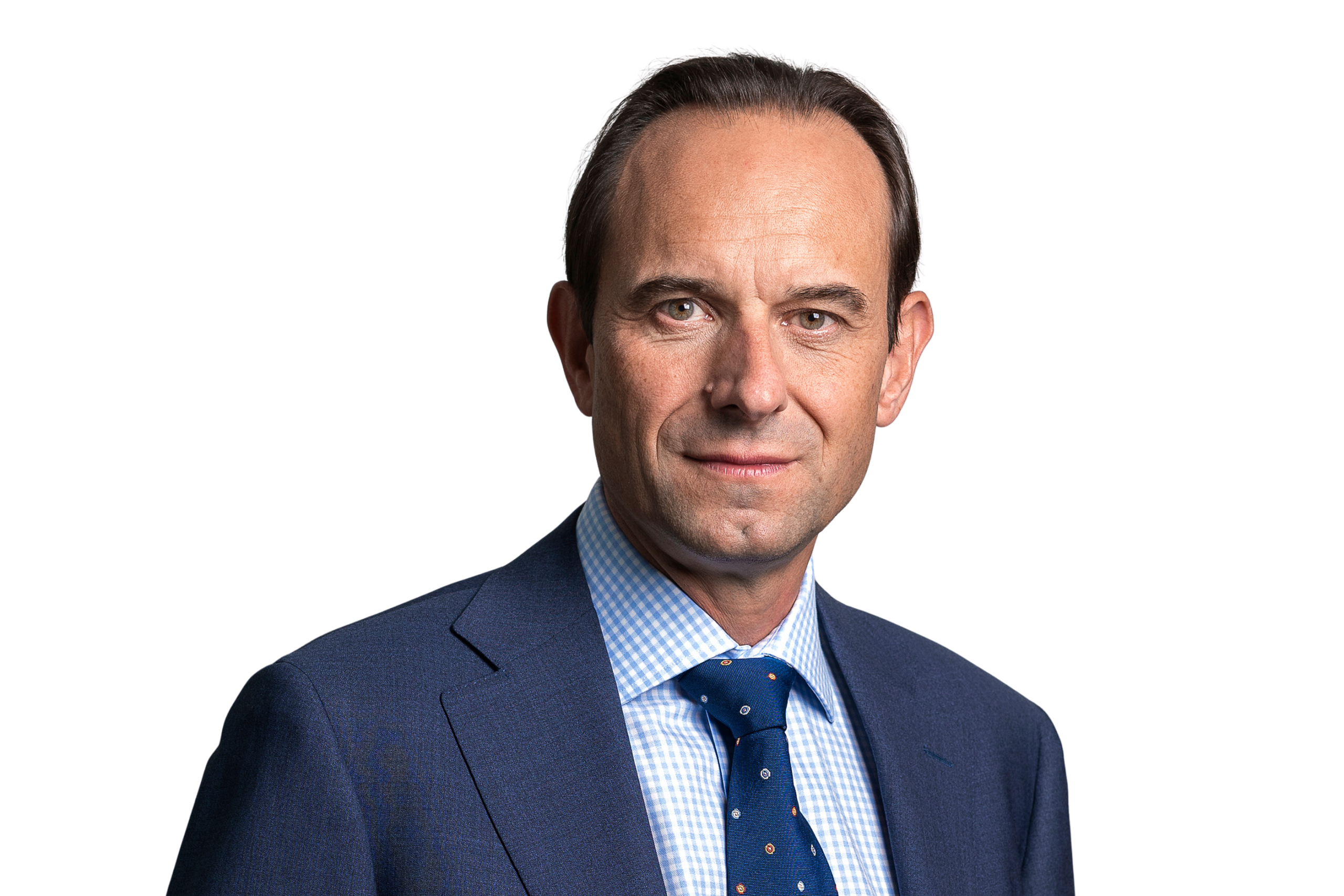
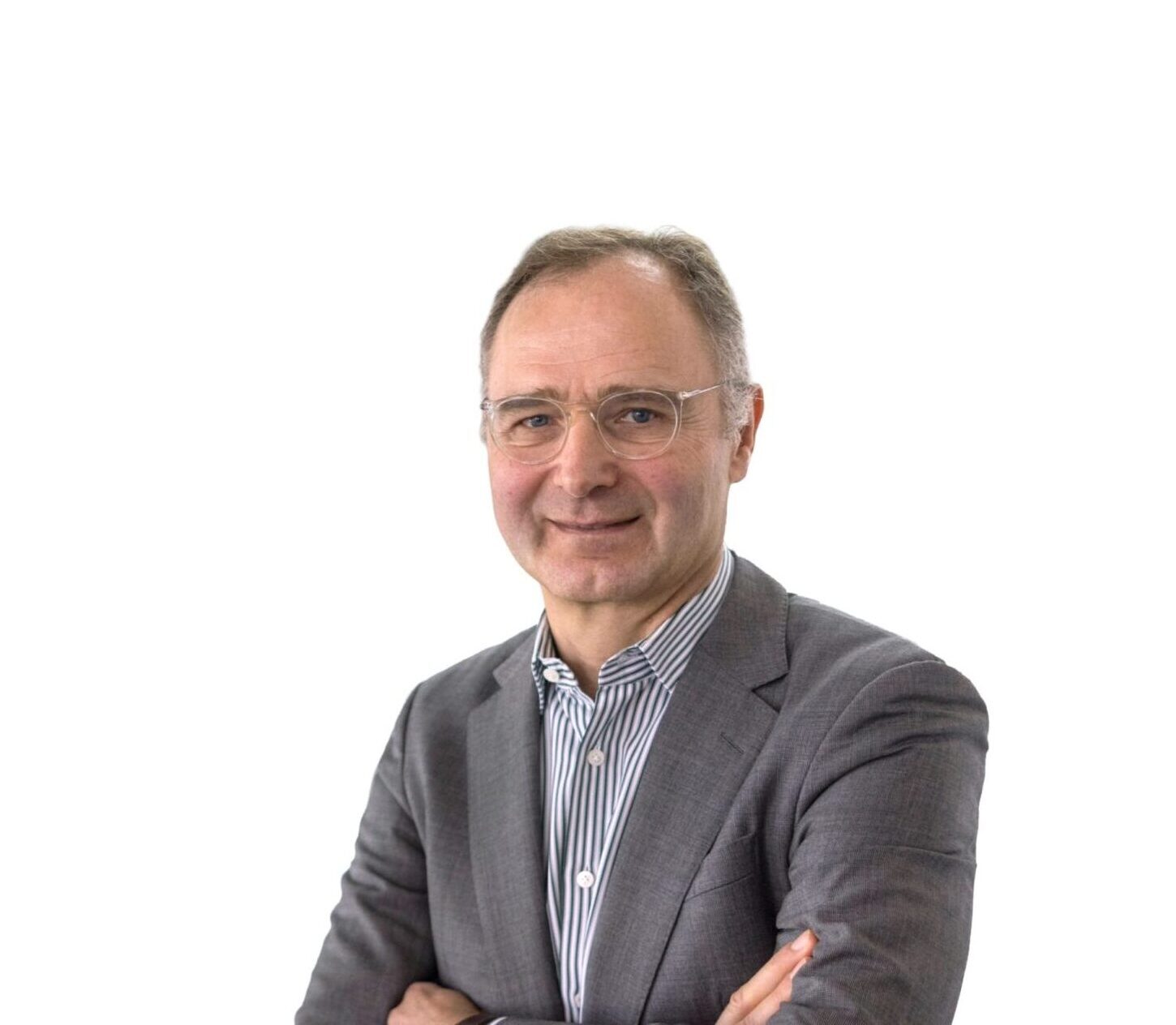
You’ve moved through almost every side of finance – academic, beginning with your doctorate here in St. Gallen, then McKinsey adviser, investment banker at Deutsche Bank, private-equity partner at EQT, and now run the infrastructure beneath all of it. Looking back, what is the through-line?
The starting point was a passion for finance. That’s something that I acquired while I was in St. Gallen. At the time, modern finance was very new. Banking studies consisted of institutional expertise and not of Black-Scholes and the modern rules of Sharpe and others. That only started at the end of the 80s. St. Gallen was among the first in Europe with Heinz Zimmermann. That passion has stayed with me for a lifetime.
The stages from there were very much driven by a blend of two things. One is a conviction that at the end of the day also finance deserves European capabilities. I’m a deeply passionate European, with a family background spanning multiple different nationalities of Europe. At the same time, my global experiences showed me that institutions can be successful in global finance and still be European.
The second theme is curiosity, which has been with me throughout the different stages of my career. I’ve always been very lucky to be presented with a breadth of different finance aspects, institutions, areas. So, I followed the opportunities. And those have changed a lot since the early 90s. I think the hottest spot in finance today is the transformation of the underlying infrastructure, driven by technological change, new asset classes, and geopolitical dynamics.
Much of your career was spent in fast-moving, deal-driven worlds. Running market infrastructure is, by contrast, a long-horizon, build-and-maintain business. What drew you to that shift, and what kind of leader has it required you to become?
All my stages in life were based on long-term relationship environments. That was true in consulting, as you don’t become a good advisor to boards and CEOs in a firm like McKinsey if you don’t have a long-term view of your clients. And McKinsey has a very deep tradition in that. The same was true at Deutsche Bank who have been anchored always in a „Hausbank“ claim. And M&A is all about long-term relationships. These are situations which take a long time to develop and when they happen are a bit like heart surgery. If you want to be trusted, you can’t just do fast-paced deals. You will do it once or twice and then you basically lose your reputation. You lose trust.
Private equity spans many years. It looks like short-term investing, but in reality, the funds run for 10 or 15 years. So, you really need to have a long view to bring deals to fruition and then to work with companies for a high valuation basis at exit.
25 years ago, I had my first encounters with Deutsche Börse Group and market infrastructure. A long horizon in working with clients and partnerships is something that is at the heart of infrastructure and of Deutsche Börse Group. That’s why it was a very natural fit. Not a move from a fast-paced to a long-term horizon, but rather continuity in building long-lasting relationships with clients and partners, now applied to market infrastructure.
The Draghi report warned that Europe risks slow agony without deeper, more integrated capital markets, yet a „Savings and Investments Union“ has been debated for a decade with little to show. Why should anyone believe this time is different?
First of all, it’s a great wake-up call and taking stock every five or six years is a good thing. The Draghi and the Letta reports have spelled out important themes of our time. In contrast to earlier efforts, I think that the ringing of the bell has been loud and clear. I think that, given Europe’s different sense of urgency, we are seeing a different sort of momentum right now in terms of what governments, the European Union, and the parliaments are doing. But also, in terms of the industry itself forcing change due to digitization, AI, global realignment, and fragmentation. All those changes are much more fundamental than they were seven or ten years ago.
As a result, the change from a Capital Markets Union to the Savings and Investments Union also marks an important change in approach. I’m much more hopeful that this approach will have an impact because the Savings and Investments Union is centered around the two biggest issues that need to be addressed. The one issue is how to build a capital base. There can be no capital market, if there is no capital. And Europe does not have enough investment capital. That’s one big theme that has been elevated compared to earlier efforts.
And secondly, the Savings and Investments Union is really centered around how to ensure that these means reach the investment opportunities. That’s also different from the past, where the approach was much more academic and focused on singular items and technical points.
Last but not least, I think it’s very important that we look at all of this as an integrated solution. And that’s why now there is a stronger focus on all aspects of capital market infrastructure. Historically, the approach was too simplistic, focusing on trading venues. That’s not the case anymore. So, all of that makes me quite hopeful that we’ll see more momentum, that we have a clearer framework, and that we are looking at it in a comprehensive way.
Europeans are among the world’s best savers but hold trillions in low-yielding deposits, while many of the continent’s most promising companies raise capital and list in New York. How much of that gap is genuinely structural – and how much is a failure of culture and political will that Europe refuses to confront?
First, there are deep structural problems in Europe. There is no question about that. If you look at how liquidity is diluted across more than 500 trading and execution venues in Europe, that clearly is something that is not in line with global best practice. Some problems are the results of misguided reforms 20 years ago. Look at the 500 trading venues, that’s the result of a misguided MiFID reform that has weakened public, transparent markets at the expense of illiquid internalization and dark pools. Those things need to be addressed.
On the culture side, I do believe that there is a change going on, very much driven by the young generation, your readers. I think we see a rise in retail investment that is very pronounced among young investors. Just four years ago, in 2022, we had 19 million ETF investors in Europe. Now we have 33 million. Just take Germany: in a single year between 2024 and 2025, the number of investors in equities and savings plans has gone from 12 to 14 million, so that’s more than 15% more in a single year. And all of that ahead of any changes to tax-related incentive models.
Therefore, I think on the culture side, there is real progress and it’s driven by your generation. It’s the young people that bring on a new culture. So, let’s make sure we continue to invest in educating young people about the importance of early savings for old-age retirement.
Roughly two-thirds of your revenue is now recurring – data, indices, settlement, subscriptions – rather than trading fees. Deutsche Börse Group increasingly resembles a technology and data company that happens to own an exchange. Is that how you see it, and does the word „exchange“ still capture what you are?
The word exchange stands for the trust in the markets. It’s a place where people are willing to trade because they have trust in the regulation of that exchange, of that marketplace. It’s because they have trust in the framework and the participants. All of that stands for what we do in other areas. You need that trust around data. You need that trust in settlement, in delivery. It’s not only the trading moment, but also the systems behind that ensure it. So, in that sense, trust stands for a big part of our mission and vision as a leading European financial market infrastructure provider with global reach.
And we see ourselves very much as an integrator of all the steps that need to happen. So, the point is: Yes, revenues are more predictable. Yes, some of the software we provide is in the form of long-term oriented subscription to software services. But at the heart of it, this all serves the purpose of creating a reliable, integrated capital market infrastructure. I think the term exchange captures this very well. However, it must not be misinterpreted as referring only to a trading venue.
With the proposed Allfunds acquisition and your „Leading the Transformation“ strategy, you’re betting heavily on growth beyond trading. Large deals in this industry have a mixed record, Deutsche Börse Group’s own history includes more than one failed mega-merger. What discipline ensures this is strategy, not empire-building?
M&A always needs to be very disciplined around strategic alignment and financial parameters. That’s why for us in most recent years it has been very important to ensure the alignment of our M&A strategy with our stakeholders‘ interests, as well as our company’s and financial interest. These have been very much in line as we invested in building our data franchise, for example, around ESG and data points. This is also very much now the case with Allfunds1. We talked earlier about the Savings and Investments Union. I think the Allfunds acquisition is very much in line with the goal of creating a pan-European, more fluid marketplace for investments. With wider access to more fund companies for retail investors, more than just a narrow single product offering when you go to your bank. All that is behind the Allfunds idea and the combination with our own venue and platform for funds. That demonstrates the strategic alignment with our own strategy, but also with our stakeholders.
Now, the financial aspect is the second dimension, and it requires discipline in transactions. However, I think it also requires a lot of discipline in execution because any deal can appear financially attractive on paper. If you are very disciplined, if you execute on it, if you realize additional potential, but don’t spend enough time on post-merger integration, it can turn out to be a bad transaction. Therefore, for us leading the transformation sets the strategic frame for our M&A strategy. The same is true for financial parameters. We are very clear about what we require to ensure that M&A deals fit our goals.
You’ve called digital assets and tokenization a genuine revolution in post-trade finance, not hype. Yet tokenization has been „about to transform finance“ for years. Concretely, what must happen in the next two years for it to become real infrastructure rather than pilots, and what worries you more: moving too slowly, or too fast?
Moving too slowly means getting disrupted. Moving too fast is always a balance between how much to invest and how to stay agile. You have to avoid becoming boxed in and narrowed down by a too strong view. I don’t think tokenization is a question of a two-year window. Traditional and new finance will still need to operate next to each other for a long period. In financial assets, there is an enormous legacy. Just take our own. We have a custody book of 22 trillion. So, while there may be new issuance, it would still take a long time to replace it. Therefore, the future is certainly a hybrid of the modern, digitized, and the more traditional world for many years to come. And we are very well placed to operate at that fault line.
To trigger transformation, we need to focus on the areas where digital creates the greatest value. A good example is the growing number of young investors, many of the new intermediaries. That’s why, for example, our partnership with Kraken, one of the leading global digital and crypto exchanges, has been such a powerful accelerator for moving from use cases and test cases to real-life delivery. That’s why we formed our own platform, D7, which has revolutionized the German market for retail structured products. That’s why our early investment in Crypto Finance and our own crypto capabilities have been very important steps to show that we are ready to move. So, we need to be ready, and we need to align with the development of the interests of our clients and their clients. And we are ready.
Europe talks about strategic autonomy in defence and energy, but rarely in finance, where it still depends heavily on US-controlled infrastructure, from dollar clearing to index providers. How exposed is Europe, and what would genuine financial sovereignty actually require?
First and foremost, I think that the good thing is that capital market integration and the Savings and Investments Union have moved up very high on the political agenda. They’re talked about as number one, two or three, along with AI and energy. I think we have reached a good level of understanding.
Now, it’s important to underline that autonomy doesn’t mean autarky. There’s a big difference. Autarky is about being isolated and doing it on your own. Capital markets will always need bridges. In that sense, we need to make sure that we can operate in US dollars. So, it is no surprise that we depend on US infrastructure. But equally, the US depends on Euro clearing. And that’s why we need to make sure that Euro clearing can happen inside the European Union, in all cases and at any moment. That’s why Deutsche Börse Group has built such a complete offering.
And that’s why we call ourselves the home of the Euro yield curve in terms of infrastructure, which includes clearing derivatives, risk management, as well as related things like our STOXX and DAX indices and others. It’s very important that we have an integrated, complete concept. We need to think through the entire value chain and make sure that all those components are addressed. That’s our responsibility. That’s what we have been very focused on. That’s why we offer the short end of the yield curve in terms of clearing and derivatives, as well as the long end of the yield curve. Therefore, we have no singular point of failure in that system.
Since Brexit, Frankfurt has competed hard with Paris and Amsterdam for Europe’s financial activity. Is Frankfurt winning that contest, and what, realistically, would it take for the continent to host a financial centre that rivals London or New York?
A financial center can only compete globally if it is not limited to a singular type of activity, like banking. Frankfurt has made enormous progress in building a proper ecosystem. Frankfurt has critical components. Just look: not only is the biggest financial market infrastructure group with the biggest stock exchange at home in Frankfurt. Frankfurt is also one of the world’s most important internet hubs providing a robust foundation for a strong technology basis. Those are good ingredients.
But today, an ecosystem needs both liquid and illiquid elements. The alternatives market is also very important. Here again, Frankfurt is evolving in most of those dimensions. Nevertheless, in terms of character and culture, Europe will always have more than one financial hub. All places need to work together.
For us as Deutsche Börse Group, our roots in Frankfurt are important. Our headquarters are located here. But at the same time, we are truly pan-European. Out of 16,500 colleagues – we call them capital market engineers – 11,000 are located in Europe, with only 4,000 in Germany. There are more than 1,000 colleagues in Luxembourg and Prague, and hundreds more in cities like Copenhagen and Paris. On 23 May, I hosted our Global Townhall from Paris. And that’s because we have important businesses located in Paris, like the European Power Exchange EPEX. So, at the end of the day, it’s about building an ecosystem. This needs cooperation between different centers in Europe. And Frankfurt is doing well.
If we spoke again at the end of your time as CEO, what would have to be true for you to call it a success for Deutsche Börse Group, and for European capital markets?
If we have led the transformation and continue to be a leading force in such a competitive global environment, this is something we can pass on to the next generation. And that generation is you. I think each of us will have to take it forward. This is not about building empires. This is not about building statues. This is not about nicer headquarters. At the end of the day, this is about building agile organizations that can continue to develop and lead the next transformation, and that can be attractive to young people. That’s how I want us to be seen as Deutsche Börse Group.
I think my predecessors have done a fantastic job. They have shown a lot of strategic foresight. They set up a framework 25 years ago that still powers us. We went public at the time. We created the first integrated market infrastructure that went beyond the classical stock exchange. They instilled the element of innovation and technology. Adding the global dimension and the truly pan-European approach is something that I think will be critical for us to continue our success.
Many of our readers study here in St. Gallen and are weighing where to begin their careers. What would you tell them about building a career in finance today and what advice would you give your own student self?
To my own student self, I would say: Be bold! My life has proven how lucky you can be. I may have been bold, but maybe I could have been even bolder. With such a fantastic education and the privilege of becoming familiar with so many aspects in finance, it’s a unique chance to be bold.
I would give two more practical pieces of advice. First, to learn the basics. Don’t be lured away by AI and other things, it’s very important to learn the basics first. How P&L works, how financial accounting works, how markets work, all of those are basics.
The second element is to find your passion. This will evolve over time. I’ve done very different things – but always centered around finance, financial institutions and financial products. Within finance you need to find something that you’re excited about. That can be the private debt market, that can be M&A, capital market infrastructure, developing new software frameworks, or being a data engineer for a while. Otherwise, it’s a difficult industry since it does not produce anything tangible like an automotive product. The product itself is not a very inspiring one and it needs a lot of hard work. It’s an industry that is well rewarded, but it’s also one that traditionally comes with unstructured working hours. It comes with hard work and agility, global mobility. If you don’t have something you really like as an area within finance, I think it can be a dull and really painful life. Avoid that. Find something that you’re passionate about in finance. And then keep developing, morph into new areas as the industry changes.
- The acquisition of Allfunds was announced in January 2026 and received shareholder approval in March 2026. Completion remains subject to regulatory approval and is expected in the first half of 2027. ↩︎