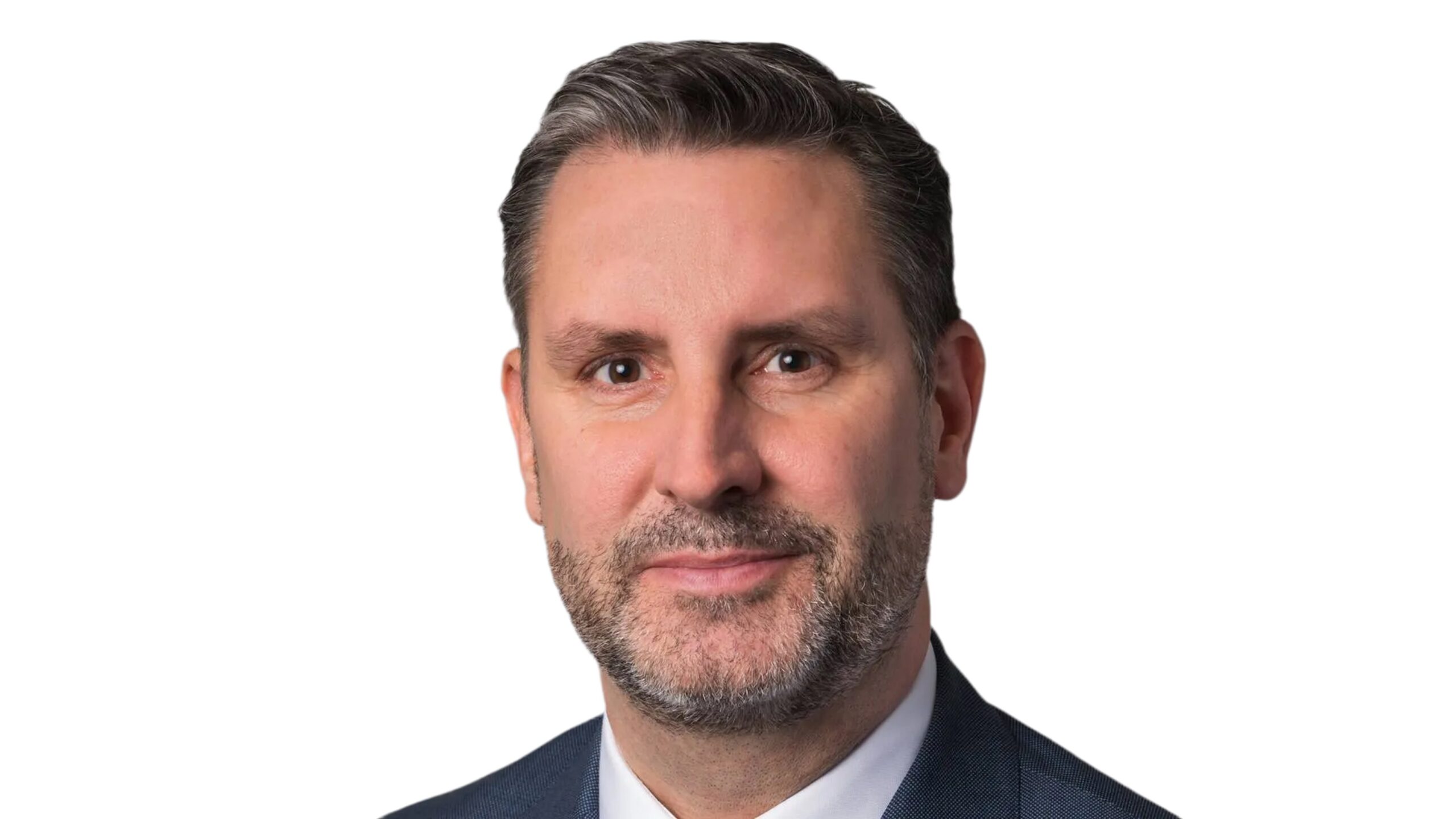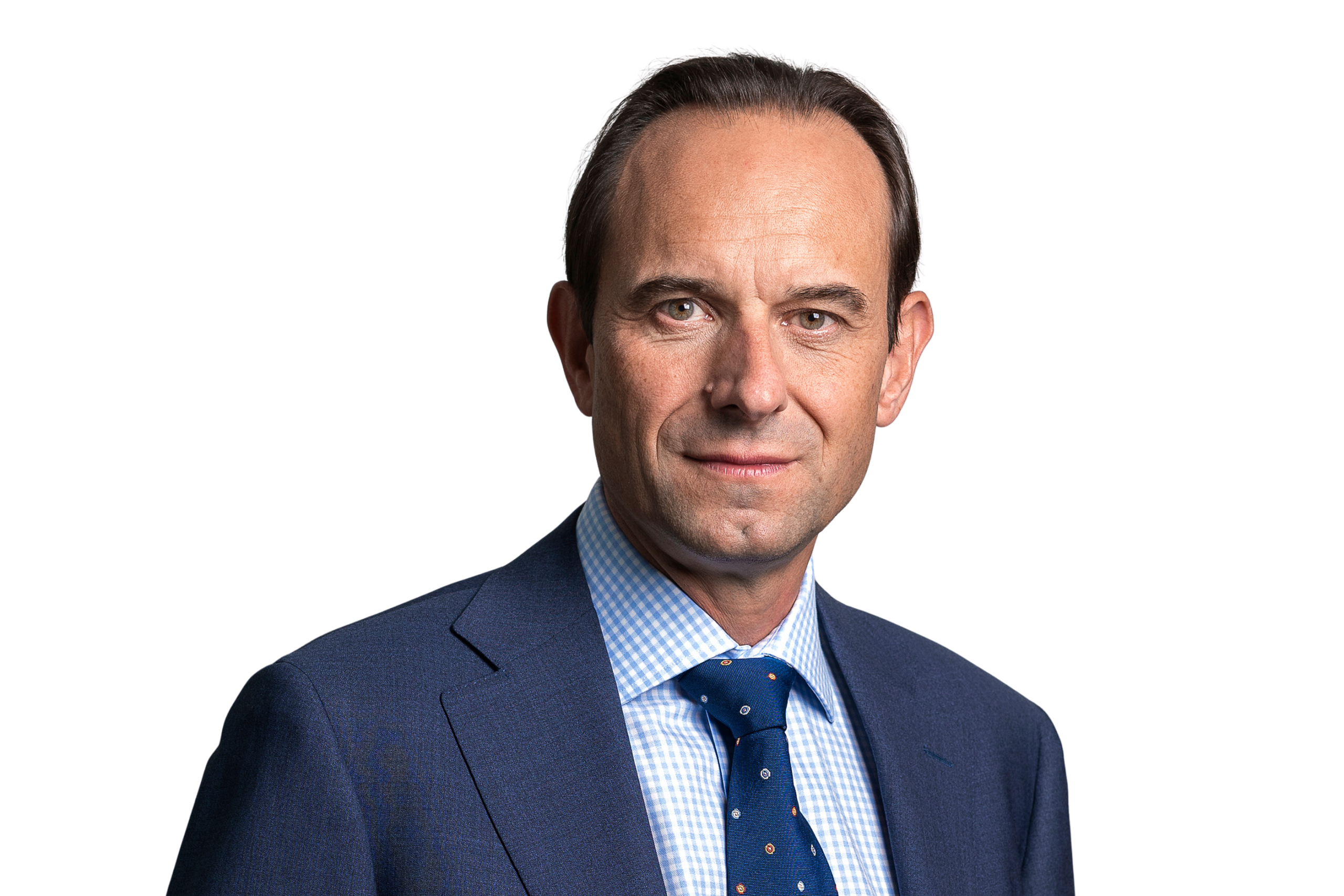

Mr. Tejpaul, to begin, could you briefly outline the key stages of your career that have shaped your leadership style and brought you to your current role as CEO of the International Private Bank at J.P. Morgan?
I joined J.P. Morgan’s analyst programme back in 1998. Back then, J.P. Morgan was a much smaller place, and it was a firm-wide analyst programme. Relatively early on, and I think this culture has stayed throughout my whole journey with the firm, the idea of training, especially when you are new, was a very intense part of the experience. I spent the first couple of months in a global training programme with analysts from all over the firm, to get indoctrinated a little bit into J.P. Morgan, but also to understand more about the culture. Part of that was understanding the firm, and part of it was making sure we had the foundation of really understanding financial markets, because at the end of the day, that is what we do as a large financial organisation.
Early on, being put in a room with people from around the world shaped my own curiosity to think about how my career could bring me to other locations within J.P. Morgan, and not just New York. That has been a theme throughout my almost 30 years with the firm. I am first generation in the US, my father is from India, my mother from Ecuador. I have a Swiss wife, whom I met in the mountains outside of Zurich, and my kids were born in London and Hong Kong. So, we are quite global in nature.
I have had the opportunity to work in many different business roles. Without going through all of them, I would highlight a couple of themes. One is that early in your career, you need to be a deep subject matter expert. The person I still ultimately report to, Mary Erdoes, strongly believes in that.
I spent almost a decade in fixed income markets, really understanding how those markets work and how to manage portfolios. I then used that as a launch point to do other things. I went on to run our investment businesses in London and Asia, took a sidestep to become Chief Risk Officer for the global wealth management business, had the opportunity to be CEO of Latin America, and now lead the International Private Bank. I have been very fortunate to work in many locations, understand different cultures, and engage with a wide range of clients.
You previously worked in London. What made you decide to move there again for a longer term?
It is partly about where the opportunity is. From a career perspective, you look at where the business opportunity is, and also at the level of flexibility your family has to support a move. In my case, I have never had to worry about the family side, my wife and children have always been open to moving wherever the opportunity is.
From a business perspective, London makes a lot of sense. My remit covers Asia, Europe, and Latin America, and if you want to be present across those regions during the workday, London is the best location.
If you look at our target market, clients with more than 20 million dollars in liquid assets, the addressable market is around 15 trillion dollars. Our market share is very high in Latin America, relatively strong in Asia, and lowest in Europe. That is where the biggest opportunity is.
So, London is not only the best place to manage the global business, but also the right place given that Europe is a top priority for growth.
You have spent much of your career at J.P. Morgan across different roles and regions. Looking back, what were one or two pivotal moments that most significantly accelerated your progression into senior leadership?
One was my move from London to Asia in 2008. It was a highly volatile and high-stress environment, and that is where I learned a lot of new skills. I had already spent a long time on the investment side, so I understood how to deal with volatile markets. But in Asia, both client behaviour and market volatility were even more extreme.
At the same time, you are coming into a business in a kind of crisis mode, trying to understand the culture and the people while they are also getting to know you. That is where a lot of lessons are learned.
Moving from New York to London is not a huge cultural adjustment. But moving from London to Asia requires you to relearn many things, especially how to be effective as a leader in a different culture where you may not speak the language. That moment, moving into a new region in the middle of volatile markets, was probably one of the most impactful in my career.
The second was moving from the business side into a risk role. It is very different to suddenly become Chief Risk Officer after running client businesses. You have to look at things from a completely different lens, how to keep the firm, clients, and balance sheet safe. Those moments, where you take a skill set and apply it to a new region, culture, or function, are where you learn the most in the shortest period of time.
Recent reports highlight J.P. Morgan’s efforts to expand its Swiss private banking business. Switzerland is one of the most competitive and mature wealth management hubs globally. What is your strategy to gain market share in Switzerland, and where do you believe J.P. Morgan can realistically outperform long-established Swiss private banks?
If you look at the large booking locations in Europe – London, Luxembourg, and Switzerland, there are always two components. One is covering international clients that want to use those locations as a booking centre, and the other is local clients.
We have always had a relatively strong presence with international clients in these locations. The real focus now is to build out our presence with local clients, Swiss residents who think in Swiss francs but want to invest globally. That is where we are looking to scale.
There are a couple of factors working in our favour. More and more clients in Europe are thinking globally about their assets. Ten or fifteen years ago, clients would typically think in their local currency and invest primarily in local markets. That home bias has been fading. Today, clients want exposure to global opportunities, especially where innovation is happening, particularly in the US. That shift is a strong opportunity for J.P. Morgan.
At the same time, proximity matters. Historically, our presence in Switzerland was centred in Geneva. But much of the local wealth is in German-speaking regions, so we expanded into Zurich with a full German-speaking team. That expansion is focused on local families, clients who generated their wealth locally and think in Swiss francs.
This requires building infrastructure, expanding product capabilities, and build an understanding of advisory services around generational planning and taxation. We have invested significantly in these areas over the past ten years, so we now have the platform to scale.
In terms of competition, trust and stability are critical. Swiss private banks are very strong. But globally, J.P. Morgan is recognised for its strong balance sheet and stability. That builds trust in the organisation.
The second aspect is what happens after clients deposit their assets, where do they get global market insights? That is where our global perspective gives us an advantage alongside local Swiss private banks.
In recent years, wealth creation has become increasingly global and entrepreneurial. How are the needs and expectations of next-generation clients different from those of traditional private banking clients?
The needs are not dramatically different, but the way clients want to interact with the bank is changing. The best experience today is a blend of human interaction and digital capabilities. If I want to think about generational planning, I will sit down with a banker. If I want to execute a transaction, I want to do that digitally.
What you are seeing is that expectations from other areas of life are being transferred to banking. Clients expect the same level of convenience and accessibility. At the same time, for major decisions, risk decisions, generational planning, there is no difference between next-generation and first-generation clients. They still want to speak to a person.
There are also some additional themes. ESG and impact investing are becoming more relevant. And social networks are stronger, next-generation clients want to connect with peers globally. They are not just looking for a banking relationship, but for access to a broader ecosystem. That can include meeting other families, sharing ideas, or even investing together.
Leading an international private bank requires managing diverse teams across regions and cultures. What are the key leadership principles you rely on to ensure alignment and performance across such a global organisation?
You need to know what is happening in your business. I travel a lot, and in every office I visit, we hold roundtables and town halls to communicate the business strategy directly. I also spend time walking the floor, asking people what they are working on, what is going well, and what is frustrating them.
At the same time, you cannot be deep in everything. But you can be very deep in a few things at a time. My philosophy is to go very deep on a small number of priorities, make sure they are moving in the right direction, and then move on to the next thing.
For example, I currently spend a lot of time on artificial intelligence. Currently three times a week my first meeting is focused on AI use cases. We go very deep, what the opportunity is, how it works, what the risks are, and whether we are moving fast enough.
If you are superficial across 100 things, you are not effective. Depth on key priorities is what drives transformation.
In a business built on individual client relationships, performance often depends on top bankers. How do you institutionalise client relationships so that they remain with the firm rather than with individual relationship managers?
The goal is not to remove the personal relationship. We want a very strong and intimate relationship between the client and the banker. But we also want clients to understand that there is a broader ecosystem behind that banker.
For example, at J.P. Morgan every private banker globally starts the day with a morning meeting. That ensures consistency in how we think about markets. So, when a client asks about markets, the answer reflects the firm’s view, not just the individual banker’s perspective.
We are balancing both: maintaining strong personal relationships while reinforcing the institutional platform behind them.
What role does AI play in building these relationships?
It depends on the context. For administrative tasks, AI can make interactions more efficient. But in terms of building relationships, AI will not replace the human element, it can only amplify it.
I will go back to the morning meeting example to explain what I mean. There are a number of clients I know well, and I may call them when things are happening in markets. I start my day by reading on the way into the office, then I attend the morning meeting and hear how we think about what is happening in markets, what different people are saying and how we interpret it.
Without AI, I would then go to my desk, pull up client accounts, try to remember everything from the morning meeting, and organise my day. If I am calling a very wealthy individual, I need to do my homework: how are they positioned, who spoke to them recently, what are our current views. For each call, that can take up to an hour of preparation to make sure I am giving relevant insights and personalising the conversation.
With AI, it knows who spoke to the client recently, what the sentiment was, what we said about markets, and how the client is positioned. It can help me prepare much faster, maybe in two or three minutes instead of an hour. That means I can be more informed when I make the call, and the interaction becomes more personalised.
But we are not trying to take that information and deliver it directly to the client. There is already an overload of information, and as a result, people are often consuming less of it. Clients still want the phone call from their banker, to help them sort through everything and put it into perspective.
That is where the combination of AI capabilities and long-standing relationships comes together. Many of our clients have worked with us for over a decade, often across multiple generations. You have that relationship, and then you use these tools to enhance it. That is really where this comes together.
If we look 5–10 years ahead: which parts of a private banker’s role do you believe will still require human judgement and which will likely disappear?
If you think about a client relationship, there are many touchpoints you have with your bank. Some might be that something is maturing and you need to decide whether to roll a deposit, you might have a corporate action, or you might need to send a wire. In terms of the number of interactions, these types of touchpoints can represent a relatively large proportion of how often you interface with the bank.
If you then fast-forward, a number of things will happen. We will be able to handle many of these processes much more efficiently through straight-through processing. Today, a lot of what happens involves unstructured information coming in through requests, which then needs to be structured and processed. In the future, clients themselves will also have AI working on their behalf.
If you project forward, many of these basic „housekeeping“ aspects of a private banking relationship can be solved on both sides. That then raises the question: what remains? What is left for the private banker in terms of direct interaction with the client?
If you look at this year, we have been in a relatively volatile market. If I told you that oil prices would be above 100 dollars, that the Strait of Hormuz would be blocked, and that interest rate cuts would be unlikely, or even replaced by potential hikes, you would say that sounds like a difficult environment.
Yet markets are at all-time highs. So, what have we been doing with clients? We have been sitting down with them and saying: let’s stick to the plan. Every client has a plan. And while the current environment may feel uncomfortable, history does not suggest that this necessarily leads to a major downturn.
Clients need to talk to people when making decisions they feel emotionally uncertain about, such as whether they can tolerate market volatility. I think those conversations, especially in more difficult moments, will continue to be one-on-one interactions between the banker and the client.
That also has implications for how we think about our analyst class, where many future private bankers come from. We receive a very large number of applications, and most candidates have strong quantitative capabilities. That is a given. The differentiator will be whether people can combine those quantitative skills with emotional intelligence to become effective private bankers.
We will continue to hire and invest in private bankers, and we will increasingly focus on people who have a natural ability for client engagement. At the same time, we will build capabilities around them to ensure they can perform their roles as effectively and as enjoyably as possible.
How do you assess geopolitical risks when advising clients?
There is always a question of what the plan is and what kind of world and environment we are living in. In many instances, overreacting to short-term news carries the risk of throwing you off your long-term plan.
That being said, it is very personal in nature. If we sit down with a client and they say they could not tolerate a five percent loss in their portfolio because it is outside their risk appetite, then for that client we might de-risk, regardless of what the house view is. That is the personal aspect of private banking.
There are also situations where enough factors begin to build up and we take a more conservative view. In those environments, we look at things such as the broader conditions in the market.
If you look at the world today, many clients hold a significant amount of cash. So even though markets have performed well, overall risk positioning is relatively conservative. There is also not a large amount of leverage in the system, neither among private clients nor companies.
When assessing potential risks, you look for signs such as excess leverage, low-quality activity in the market, or limited liquidity in the system. There are moments where we become more conservative. But over the long term, experience has shown that staying invested and sticking to a well-defined plan tends to be more effective than reacting to short-term market developments.
Many students today feel pressure to optimise every step of their career early on with internships, networking and skill-building. Looking back at your own path, which decisions actually mattered most in the long-run and which ones are often overemphasised?
I would go back to what I said earlier about being a deep subject matter expert and building real skills. I will use AI as an example. In my day, your ability to navigate Excel and PowerPoint made you an effective analyst. If you knew how to use macros and other advanced tools that only a small percentage of people understood, you could be much more efficient and effective than your peer group.
Today, AI is that differentiator. Everyone has experimented with these tools, and everyone has them on their phones. But the number of people who are truly deep, really deep, on AI is probably one out of a hundred. I interview a lot of young people, and many say they are learning and building capabilities in this area. But the ones who really understand it are spending their entire weekends working on it, to the point where they become frustrated because the outcomes are not what they expected.
If you think AI is amazing and will change the world, but your engagement with it is superficial, then you do not really understand it. The people who will succeed are those who go deep enough to become frustrated, because that means they are pushing the boundaries of what the technology can do. Over the long term, that is what creates differentiation and it is still a very small percentage of people doing this. For me, years ago, it was Excel. Today, it is AI.
The other point is networking. It is important, but it cannot be superficial. If you engage with someone, there needs to be a clear purpose. You need to be well prepared and know what you want to get out of that interaction. People remember you when you have done your homework before the meeting.
To conclude, is there a message or piece of advice you would like to share with students who are preparing to enter an increasingly complex and dynamic business world?
I would say: think out of the box with your career, especially when it comes to opportunities that may not immediately make sense. Listen carefully to those opportunities. Every job that exists today will look different in the future, so something that does not seem relevant now might become very relevant later.
Even in my own career, it was not always obvious to take certain roles, whether moving into risk or relocating to Asia. But being willing to listen and make decisions based on facts and data has been important.
Also, the younger you are, the less complicated life tends to be. That gives you more flexibility. If you have the opportunity to move geographically or try something different, do it early. That helps you develop a rhythm of being versatile. If you wait too long, it becomes easier to get stuck, and you lose the chance to be more creative with your career path.
Would you ever consider moving back to New York? Or do you miss it?
I will give you a simple answer. I have worked closely with Mary Erdoes and the broader leadership of J.P. Morgan for nearly 28 years. I would go anywhere in the world if I believed it was the right opportunity for me.