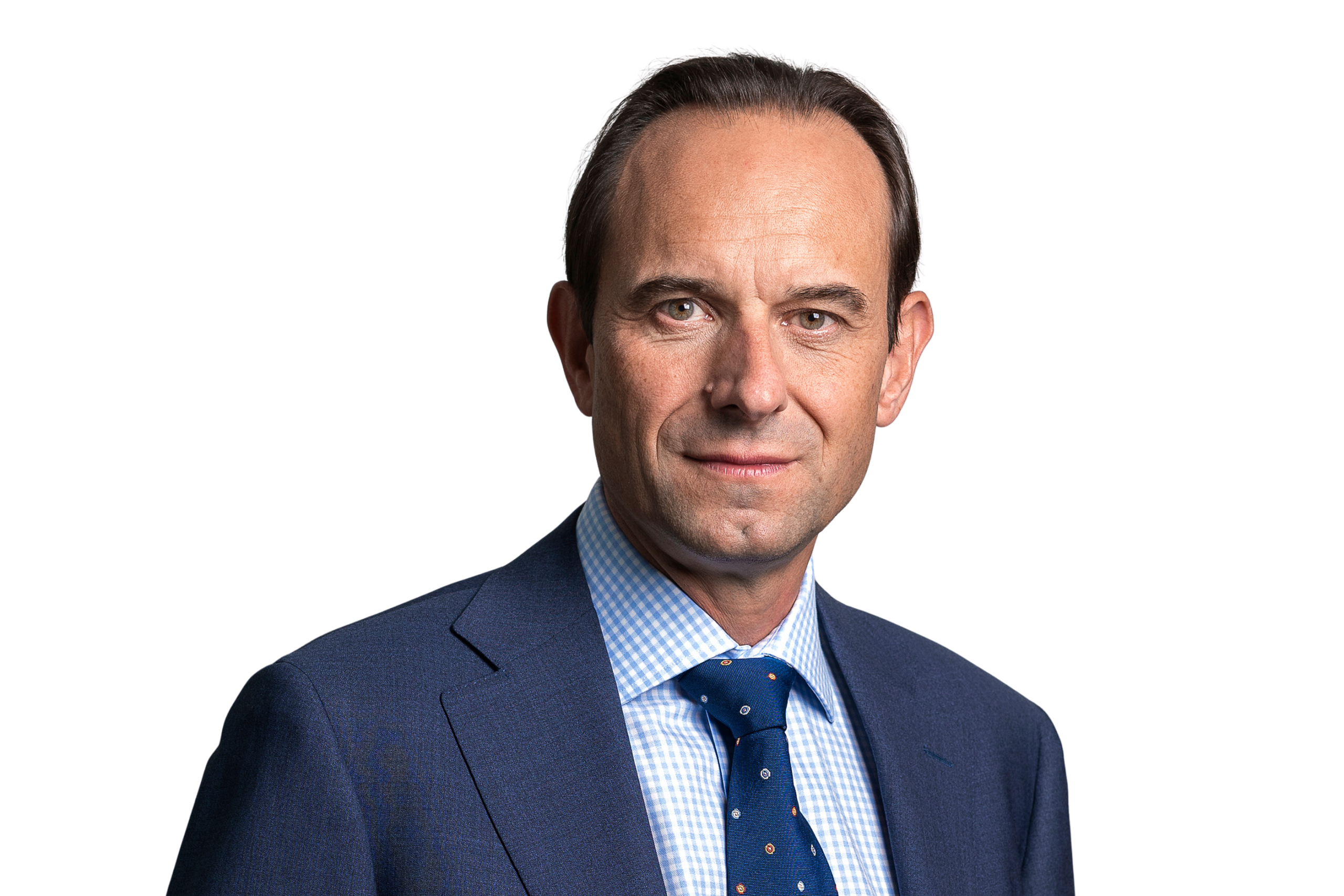

Mr. Pauli, thank you very much for taking the time to speak with us today. To start, you spent two decades at UBS before joining Bank of America in 2019. What characterises the culture of a US universal bank in capital markets, and how does it shape the way decisions actually get made?
The culture at banks, at least in capital markets, has always been characterized by teamwork and collaboration. That has always been the mantra and the basis for success, regardless of the firm you work for. At Bank of America, the culture is very pragmatic and solution-oriented. We can discuss and debate, but at a certain point, the focus shifts clearly to execution. Culturally, this means exchanging views, bringing people together, hearing everyone out and then, at a defined point in time, stopping the clock, deciding, and moving.
Since the consolidation of the Swiss banking market in 2023, Switzerland effectively has one domestic universal bank left at the top. How has that reshaped the opening for foreign players like Bank of America, and what does Zurich look like from your seat compared to three years ago?
It was painful to see the consolidation of the two large Swiss banks, because for decades the competitive landscape was characterized by two strong Swiss banks that together commanded a very significant market share versus the rest of the banking market, particularly in corporate banking and to a lesser extent in investment banking. After that consolidation, all corporates in the Swiss market had to reconsider their bank groups. From a lending perspective, many were keen to avoid a „primus inter pares“ and instead ensure that lending relationships are on a level playing field.
This opened opportunities for banks like ours to step into lending relationships that we did not have before. It opened client relationships where people proactively approached us to say that there was an opening and that they were looking for another partner to reduce concentration risk in the market. So there was a push from corporates and a pull from our side, because suddenly there was material market share up for grabs, not so much because the market itself had grown dramatically, but because of the need to reduce concentration risk. And Swiss market needs matched our offering perfectly.
The Swiss market is highly attractive. It is one of the best-rated markets from a risk perspective globally, and it has global champions across a wide variety of different industries and public and private companies alike. That makes it extremely interesting for a bank like ours with such a global footprint and rich product and service offering. Suddenly we were presented with an opportunity to enter and grow, and that is what we have done and will continue doing for years to come.
We have hired significantly in corporate banking, investment banking, payments, and equities, across all business lines in which we were present, and we will continue to do so because we still see opportunities. The process has not stopped; in fact, it is only the beginning. A second effect is that banking consolidation is not over. Whether further consolidation among large European banks will continue or not, treasury teams will have to continue to monitor the banking landscape. That would again trigger a review of banking relationships.
How does Zurich look compared to three years ago? It is clearly more international. You now have one very present Swiss bank at the top. The cantonal banks have stepped in and have done extremely well in filling parts of the void that was created after the consolidation, especially for smaller institutions. For larger credit volumes, banks like ours have made fantastic inroads, gained meaningful market shares, and are looking to grow further. It has been a very interesting three years for a bank like ours.
Swiss IPO activity in 2025 was limited, with only a couple of genuine listings raising fresh capital. You expect a handful of listings in 2026. What has to fall into place for them to actually list, rather than going down the trade sale route?
If I take a step back and look at my 22 years in this market, Switzerland has never been driven primarily by general equity market performance when it comes to IPO activity. This is not a market where private-equity ownership has been as dominant as in Germany, for example. There have been relatively few assets in private-equity hands. So even if markets perform very strongly, you do not suddenly see ten private-equity-owned companies coming to market at once. In Switzerland, in a good year, you typically see three to five companies coming to market, family-owned businesses, spin-offs from larger corporates, or occasionally private-equity-owned assets.
2025 was not a bad year in terms of equity performance, but a number of factors need to fall into place for IPOs to materialize. First, you need generally good equity-market conditions, meaning the main equity indices should be trending upwards. Second, equity-fund flows need to be positive; money has to flow into equity funds, because that signals that investors are allocating capital to equities. Third, volatility should be relatively benign. That is a key benchmark for us: ideally the volatility index should be below 20. Over the last 10 to 15 years, it has been hovering around 15 to 16 on average. Spikes in volatility, like we saw around the crisis in the Middle East, are very damaging to IPO markets.
Most importantly, if IPOs come to market and price, they need to trade well. IPO aftermarket performance is, for me, one of the most important indicators for whether the IPO market is truly open. Interest rates also play a role. When we had negative interest rates in Switzerland, a lot of money flowed into equities, which meant that IPOs often outperformed M&A. In those periods, IPOs were more attractive than selling via M&A. At the moment, on average, M&A probably looks more attractive than IPOs, because IPO discounts at pricing are still somewhat wider than we would like them to be.
Private equity is sitting on a record backlog of mature portfolio companies, and dual-track is now the default. From an ECM banker’s seat, when does dual-track stop being a negotiation tool and start becoming a real signal that the IPO market is back?
Dual-track has always been something that a seller would naturally consider. The question is how you use the dual-track. It depends on how strong the hand is that you hold. On the M&A side, you need to look at your landscape: are there strategic buyers, are there financial buyers, and are the debt markets open for other private-equity firms to finance the asset? You need to assess how strong your M&A hand is: are there enough credible buyers, what is the competitive tension, and what kind of valuation can you achieve?
Then you look at the equity markets. Right now, if you go to the US, you see IPOs pricing every week; in Europe, not to the same extent yet. The IPO is therefore a true option. You need to test each market. On the M&A side, you prepare an information memorandum, send it to potential buyers, gauge their interest, and see whether it is real. On the equity side, we do the same with investors: we present the company, collect feedback, and get a sense of whether the IPO track is viable.
In today’s market, the main risk you take on the equity side is market volatility, effectively event risk. If hostilities, for example in the Middle East, escalate materially, asset prices can move significantly. As a seller, you take risk if you forgo the M&A option, say at a price of 100, because equity investors might have told you yesterday they would be there at 110, but a geopolitical shock could move that 110 to 90. You take that volatility risk relative to the M&A alternative. That trade-off is what you have to balance.
You will only truly know after you have tested both tracks. The question we as bankers have to answer for our clients is: which track is likely to become the leading one? Do we go to M&A buyers first, or do we prioritize the equity track? That also depends on how prepared the company is. Are the accounts ready? How strong is the organic performance of the company? If everything is ready and you have a level playing field, you can run both tracks in parallel. Often, however, that is not the case.
If you have a strong M&A hand, you might start there. If you want to create more competitive tension, you will test the equity markets to put pressure on M&A buyers, but only if the equity market is „real“. In a very benign volatility environment, say volatility around 15 to 16, you have a strong hand on the equity side to challenge M&A buyers. If M&A buyers believe that the equity market is not truly there, for example because IPO discounts, as we saw two years ago, are very wide, then the equity track is not a credible alternative and cannot be used effectively to force the hand of M&A buyers. Dual-track becomes a true signal that the IPO market is back when the equity leg is clearly real, not just theoretical.
There have been recent examples of Swiss-headquartered companies choosing venues other than SIX for major listings, whether a US listing for a spun-off business or another European exchange. Is SIX still a credible venue for Switzerland’s largest IPOs?
One hundred percent. Let me start with the spin-off case. Take a recent case of a Swiss industrial group spinning off its North American business and listing it in the US. There will be very specific reasons for such a decision. The peer group of such a North American business might trade at meaningfully higher multiples than the parent group, in some cases at multiples several times those of the group. You can immediately see the value-creation potential, if it is real. In such a case we might observe what we call „flow-forward“, i.e. investors position themselves in the shares of the parent company before the spin actually occurs. Hence, there can be very specific reasons for a US listing or a subsequent dual listing. None of that has anything to do with the appeal, or lack thereof, of the Swiss stock exchange itself.
Switzerland has one of the strongest investor infrastructures in Europe. The depth of the Swiss investor base is comparable only to that of the United Kingdom and exceeds that of most other major European markets. By investor infrastructure I refer to the number of asset managers, family offices and funds that a company can visit on a roadshow for equity offerings in one country. If a company lists in Switzerland, I can take it to investors in Zurich for two days, then Geneva (possibly longer) for a day; theoretically, I can add half a day in Basel and a couple of meetings in Lugano and Bern. That density simply does not exist elsewhere. Other European financial centres typically allow only a handful of meetings in one or two cities, and then there is London. That is why the Swiss infrastructure is so distinctive.
Liquidity is strong, and the listing process is swift and efficient. Research coverage is strong and broad. And the Swiss stock exchange offers everything a corporate needs to list successfully in any market segment.
Private credit has grown by roughly 75% in five years to around 3.5 trillion dollars globally, and now finances deals that used to live in syndicated loan and high-yield markets. From your seat at a US universal bank that is active across both, how do you see the interplay between private credit and the public capital markets evolving over the next few years?
Private credit was born out of a situation where bank lending came under intense regulatory scrutiny, and lending markets were further distorted by events such as the war in Ukraine. In that environment, private credit emerged as a very compelling alternative source of financing. Today, with lending and credit markets functioning more normally, I am not sure private credit will remain quite as competitive or compelling in every situation. It is definitely a segment to watch.
If you were starting your career in capital markets today instead of in the late nineties, would you still pick London, and which part of the business would you want to learn first?
I would probably start in London again, which is actually a topic I often discuss with students and new hires. From my perspective, at a very young age, your success in this career depends heavily on the number of transactions you work on. By definition, you see much more deal flow in large financial centres: London, New York, Hong Kong and to a lesser extent Paris or Tokyo. In my view, you want to be in one of those major hubs at the beginning of your career. The more transactions and the greater variety of situations you see, the faster you build experience.
The second aspect is labour mobility. In London or New York, for example, you have sovereign wealth funds, hedge funds, institutional investors, and private-equity firms all in one place. As a young professional, you have far more exposure to all these constituencies than you would in a city like Zurich. Zurich is a great place to work, but it offers a different type of exposure. In Zurich, you typically do what we call country coverage: you learn a lot about individual clients and markets, you are more client-focused and less transaction-focused. Both models have their pros and cons. I tend to believe you mature faster in the role if you see more deals and learn more in a shorter period. So my advice is: start in an international financial hub, or, if you start in a smaller one, move to a larger hub after a couple of years to gain that experience. You can always decide later whether you prefer Zurich or one of the big, buzzing cities.
You’ve hired and developed a lot of young bankers over the years. What’s the trait you’ve seen separate the ones who go on to build long, successful careers in capital markets from the rest?
In banking, those who have been most successful are the ones who consistently drive themselves every single day. You need hunger, ambition, dedication and a natural curiosity to learn new things. You also need the ability to mature from role to role. When you start as an analyst, you execute what others ask you to do. As an associate, you start managing down and up. As a vice president, you manage your own projects. As a director, you take ownership of clients and revenue. As a managing director, you oversee the business. Each step requires a mental evolution and new skills. For some people that evolution comes naturally; for others it takes more time.
Dedication is one ingredient, but you also need natural curiosity and a certain maturity in how you approach the job. And you need to enjoy it. The willingness to step out of your comfort zone is an important driver of growing as an individual and being successful. To grow, you have to do that. If you are introverted or hesitant, you still need to push yourself: when I started, going out onto a trading floor with 150 people and talking to traders and salespeople I did not know forced me out of my comfort zone. You have to do these things, introduce yourself, be proactive and keep doing it until it feels natural.